update

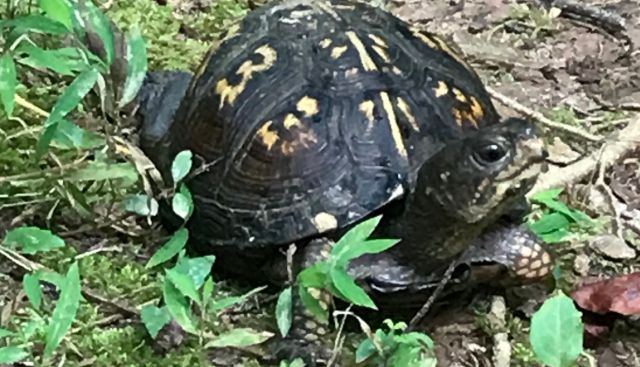
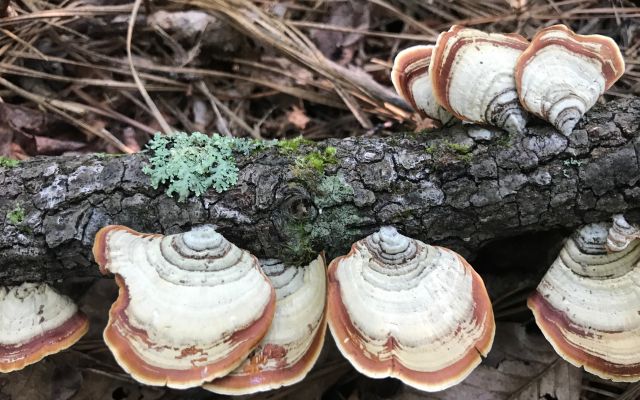
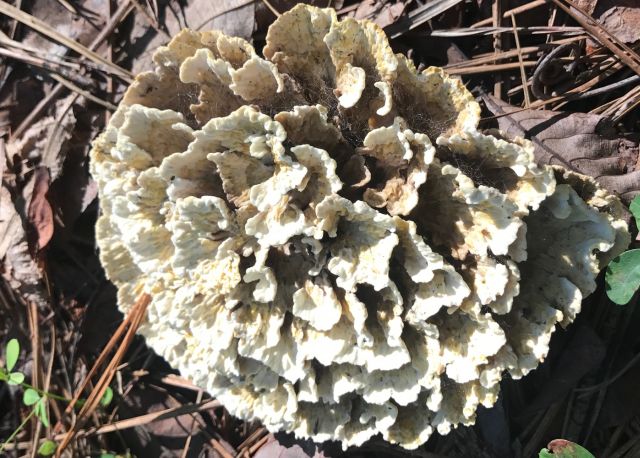
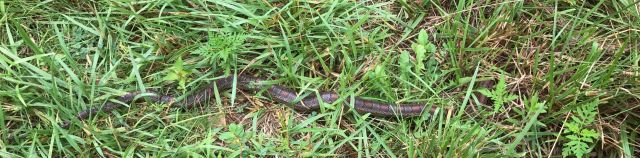
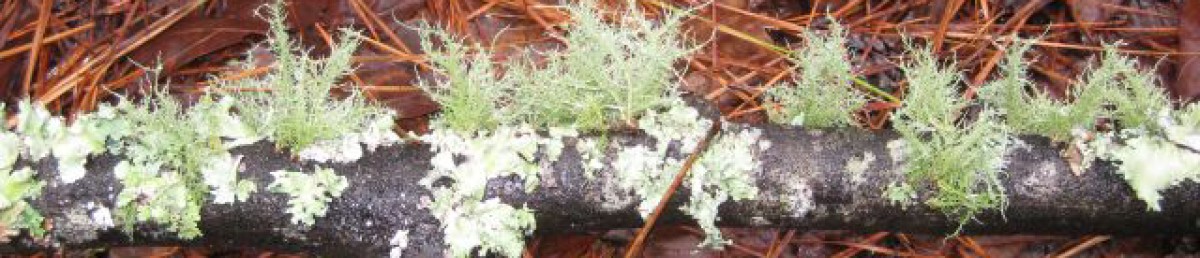
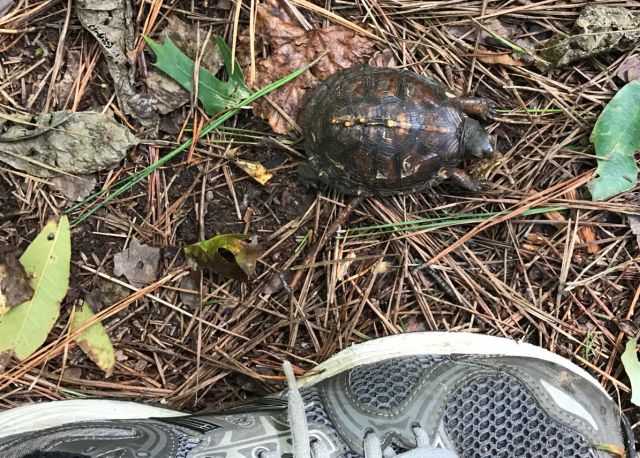
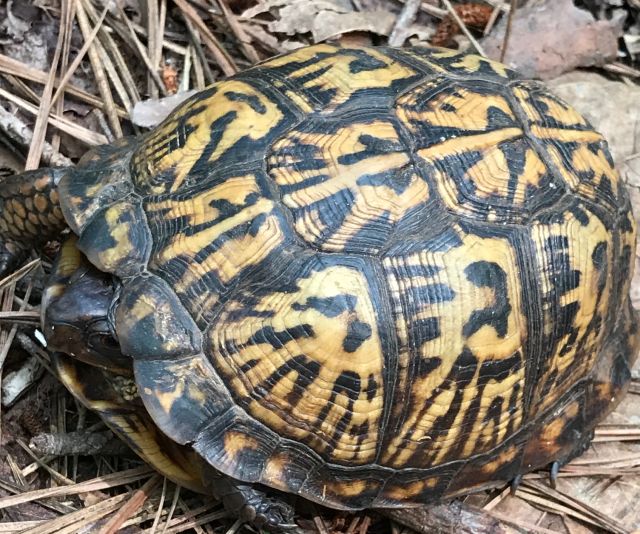
See pic above – when walking in the woods you need to watch where you walk – not only to avoid a copperhead but also to see what is going on down there – the different fungi and this small guy for whom my misstep would have been fatal.

My last post was Aug 28 and since then I unfortunately had to focus on other matters.  The garden has transitioned with the approach of Fall.

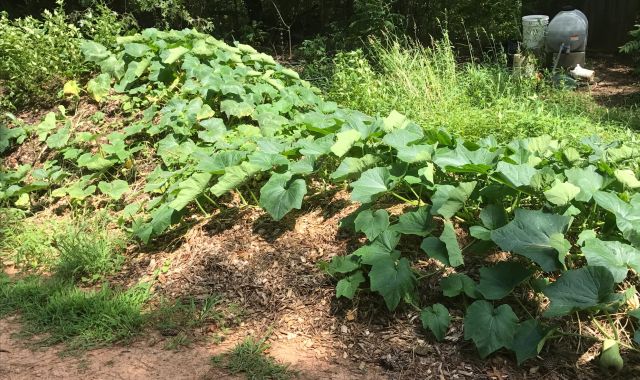
What little time I had for growing I tried to spend wisely.  I pulled the fading squash plants which had done an excellent job shading with their large leaves the raised beds they inhabited.  So, once they were out minimal weeding was required.  I seeded with mixtures of late season greens (collard, kale, mustard, lettuce, chard) – when I say mixture I mean I loaded the different seeds into the hopper of the seed spreader and expelled them all together whereas in the past I seeded different types in straight rows.  My new approach means that if a particular variety does not do well it will be superseded by another green rather than by a weed.  A negative is they will be on top of each other and not realize full growth.  But we will snip frequently for the kitchen and they will cover the beds well and dissuade weeds.
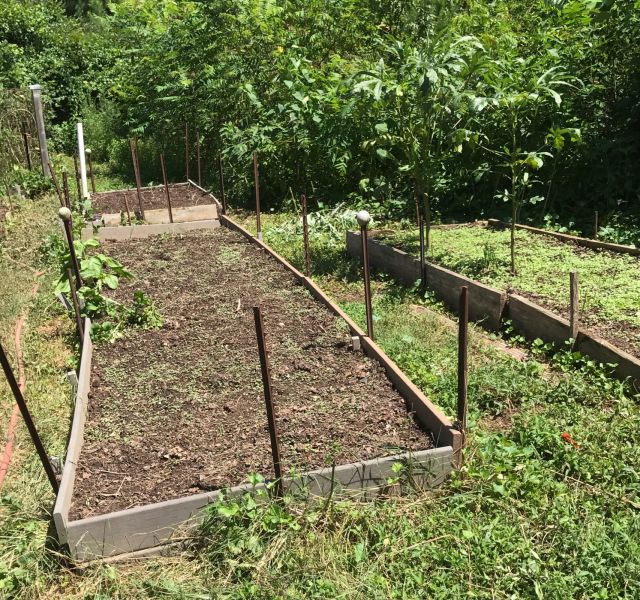
Sept 2, some of the recently seeded beds

Some 4 weeks later the beds had really taken off.
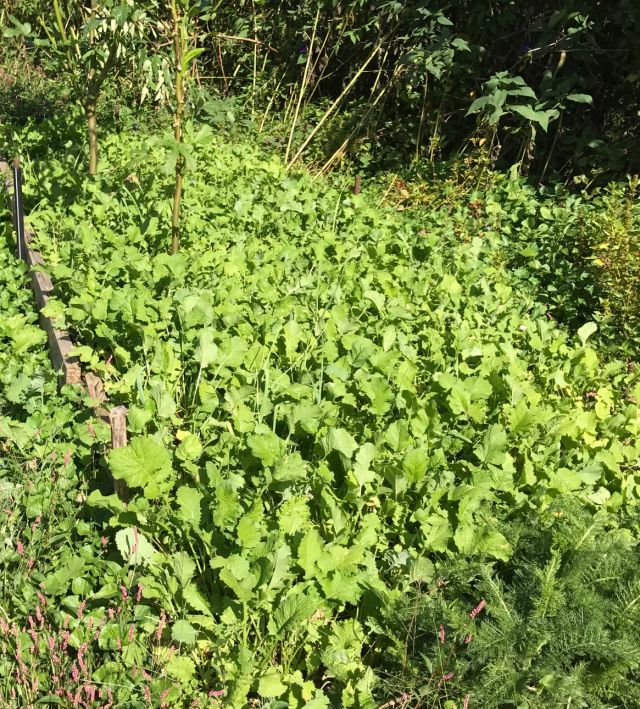
a bustling bed

Some of the beds did not do as well and I surmise 2 reasons – they were planted a few days after the others and missed the rains; and I seeded them with Austrian winter peas and several other peas and I have a rabbit population which preyed on my peas throughout the season and probably nailed these as well.
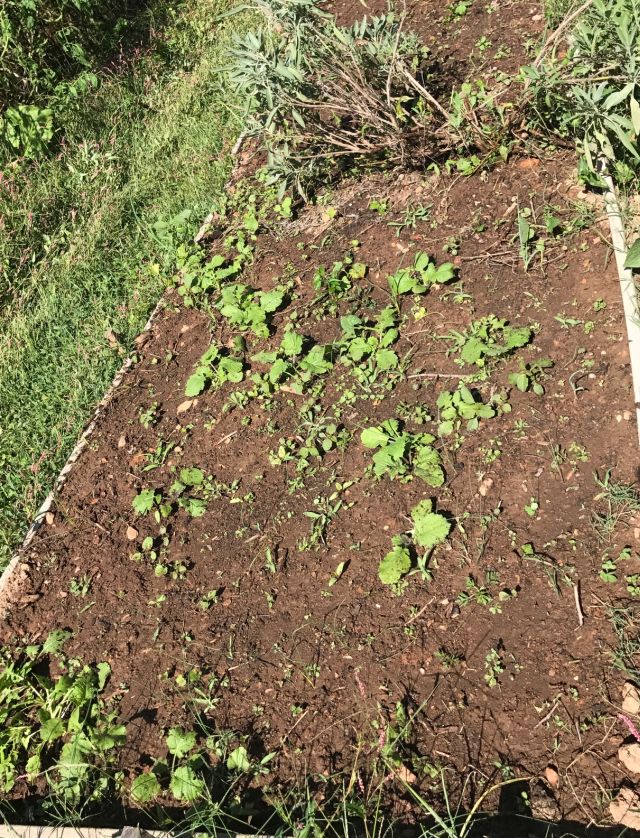
a weak bed. oh well, I will have to pass on peas until I have dealt with the rabbits

A favorite all rounder is chard – it grows well in spring, somehow survives our summers and comes back strongly in fall.

still looking beat up in early September, but once cooler weather sets in and pests abate it will be vigorous

I previously mentioned a volunteer butternut squash plant which took up residence on the compost head and has done magnificently.  A week ago we picked from this plant 5 butternut and have subsequently picked more.
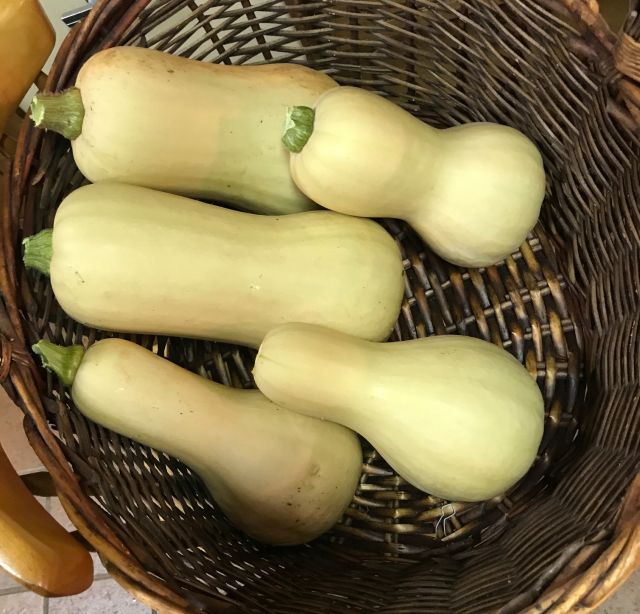
fresh succulent butternut from an unexpected source

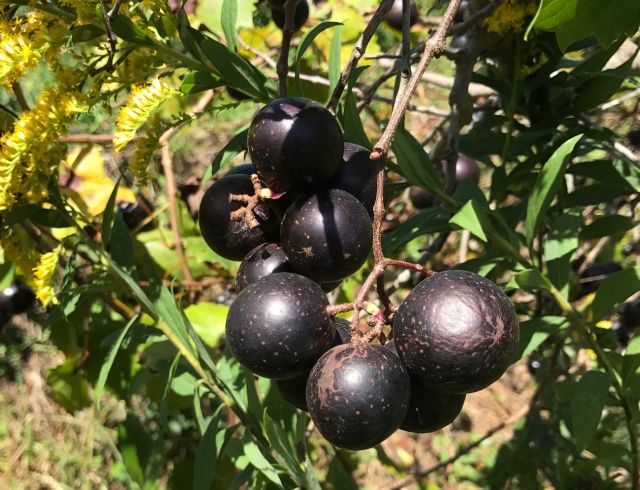
The muscadine at this time of year taste delicious.    I have several varieties and interestingly, different ones perform better each year.  These black muscadine are very sweet.
the trick is to pick the ones which have lost their gloss, such as the ones in front compared with those behind

I have 2 varieties of persimmon – American and Asian and I planted them 4 years ago and they are still not producing.  However at the gate to the woods I noticed some cherry looking fruit on a tree and I think these are self grown American persimmon.  Impossibly bitter to eat until they have matured.
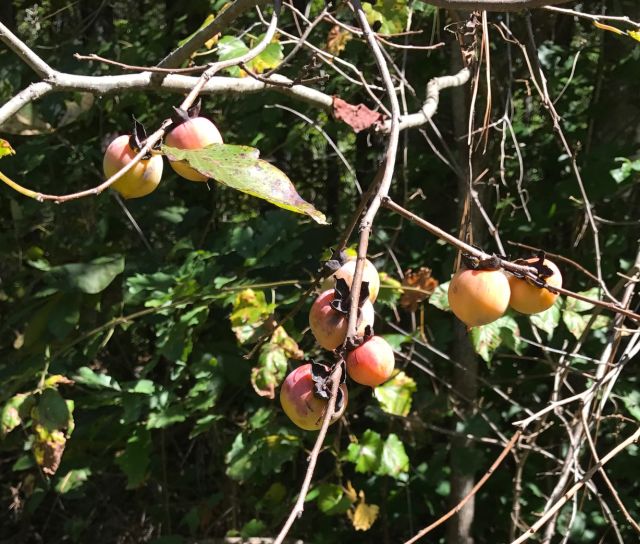
lurking in the woods

Eight years ago when I purchased the woods I decided to grow black walnut.  I ordered 25 at a very reasonable price from the Georgia Forestry Commission and gave some to neighbors in Atlanta and planted 3 at our Atlanta house.  I thought shading from larger trees would be an issue and it sure was.  None of the trees in the woods did well and at the Atlanta house the one which did the very best, unsurprisingly got the most light.  One of my sons visiting from the west coast decided it would be great to eat a black walnut.  The first step is dehusking.
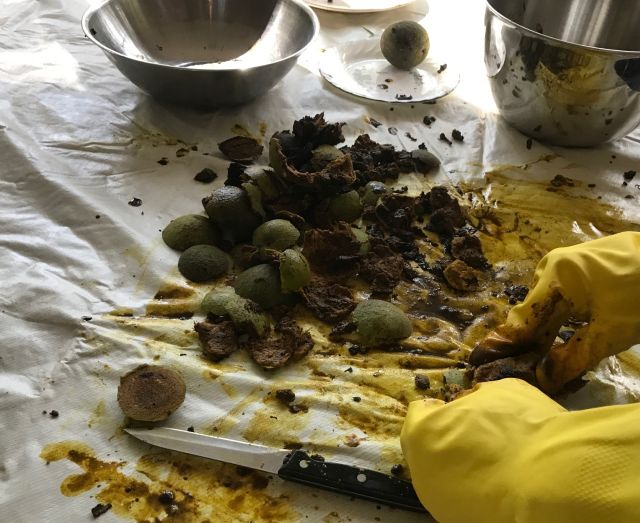
its a messy business and their stain is long lived

Here they are with their husks removed.
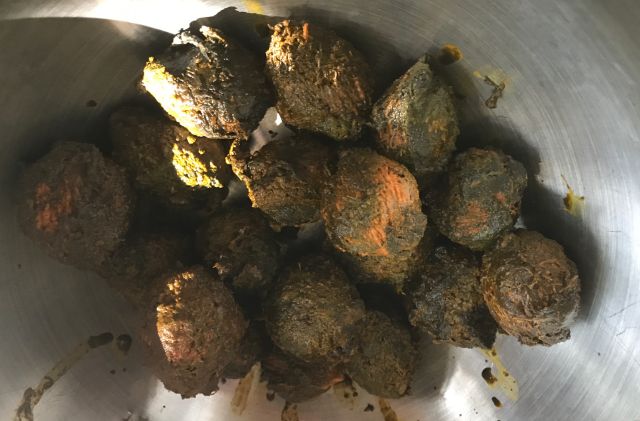
next step is for them to dry. unfortunately he had to leave before they had dried

Finally, goldenrod has flowered to the delight of the bees.

summer nears end

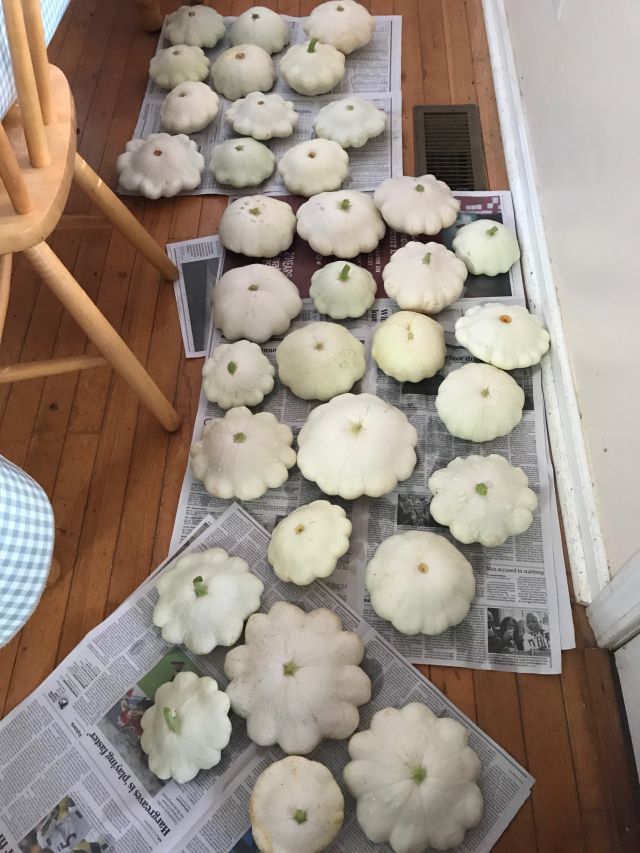
I had large yields of vegetables and fruit this year due primarily to plentiful rains and my slowly improving techniques.  We had so many patty pan squash we gave a 5 gal bucket to the local high end restaurant.

we gave most of these to the Woodbridge Inn, we washed and dried them first. next year, if we go commercial, we will sell them at the market or to the inn
the Woodbridge Inn is a distinctive feature in the town of Jasper, seat of Pickens county
the entrance to the inn is relaxed and inviting
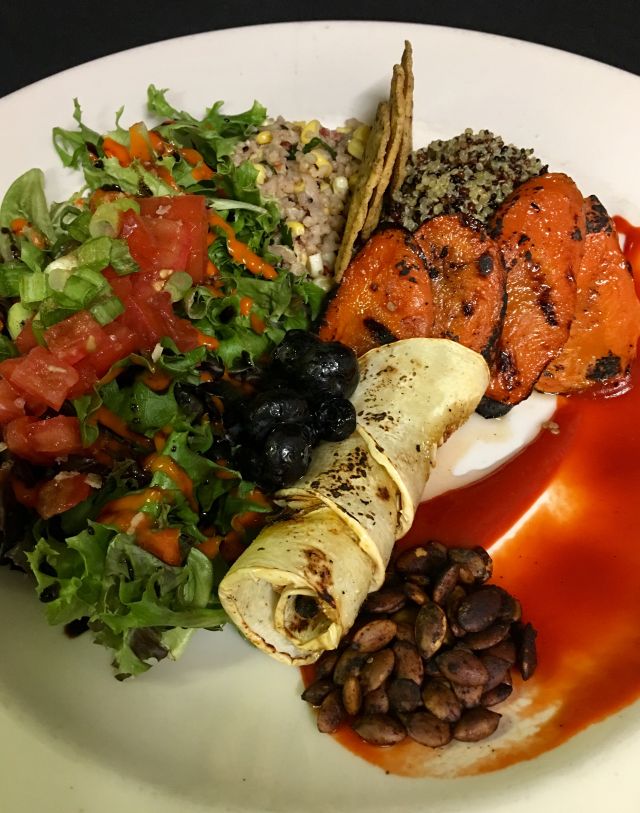
Chef David texted me this pic of a sumptuous plate with my squash centerfold and said they were “Fantastic!!!”

So the squash were great this year but a few days ago I noticed borer holes in some of the new squash, so I yanked out all the squash plants for the compost heap.  They provided such good cover there were very few weeds and it was quick work to mulch the beds and seed with cool season crops – kale, collard, mustard, chard, lettuce, radishes etc.

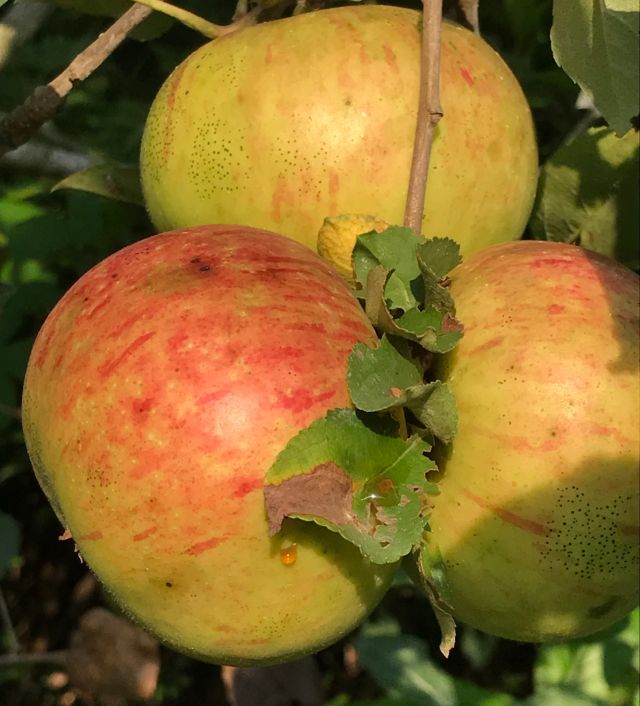
Cucumbers are nearing their end but sweet peppers are doing fine and some tomato plants are soldiering on.  In the orchard most of the apples are done.  The Arkansas Black was excellent this year – may be due to my venting procedure to remove air bubbles from my gravity feed irrigation system – the water I purged to expel the bubbles was channeled to the Arkansas Black so it received considerably more water than the other trees.  The Gold Rush is the last producing in my main orchard and is ok but significant pest presence.  In my other little orchard the Ein Shemer apple is now producing and tastes delicious.  As previously posted, the Jujube failed this year due to a late frost, I believe, and the figs which grow a bit each year, did not have much to offer.  Perhaps more next year, if they survive the winter.

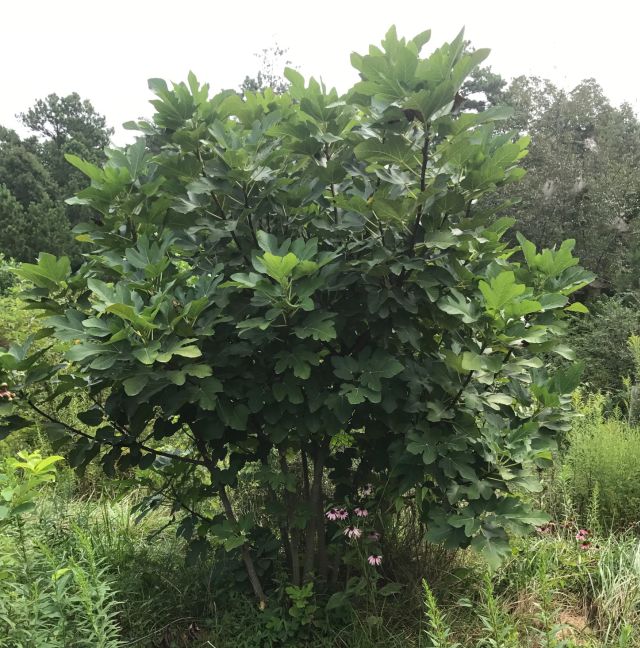
I will prune this fig tree later in the year and hope for figs next year.

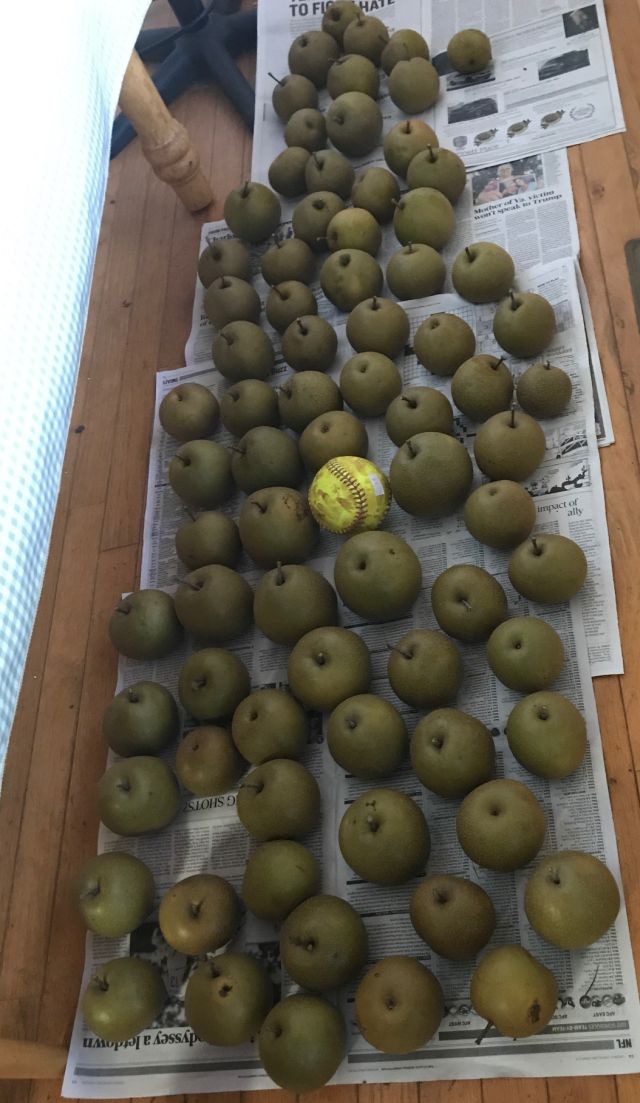
The Giant Korean pear has again been a steller producer – so many delicious, crunchy, pleasantly sweet pears.

here are some of the pears from the one small tree, with a softball in the center for comparison

The pears must be refrigerated otherwise they develop black spots and go bad.  I set out some tables in the basement (my root cellar proxy) and am storing my apples there and they seem to be holding up well.

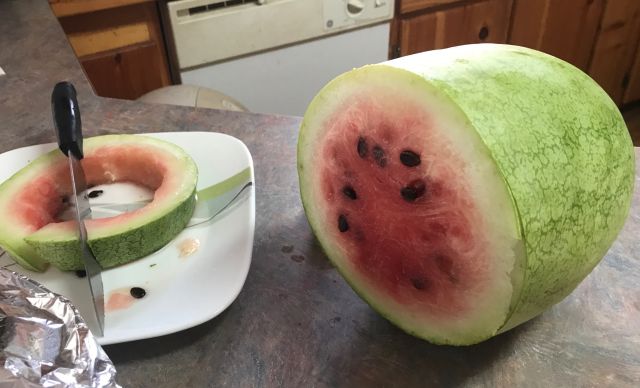
We picked this watermelon too early, though it was sweet enough.

we will probably skip watermelons next year

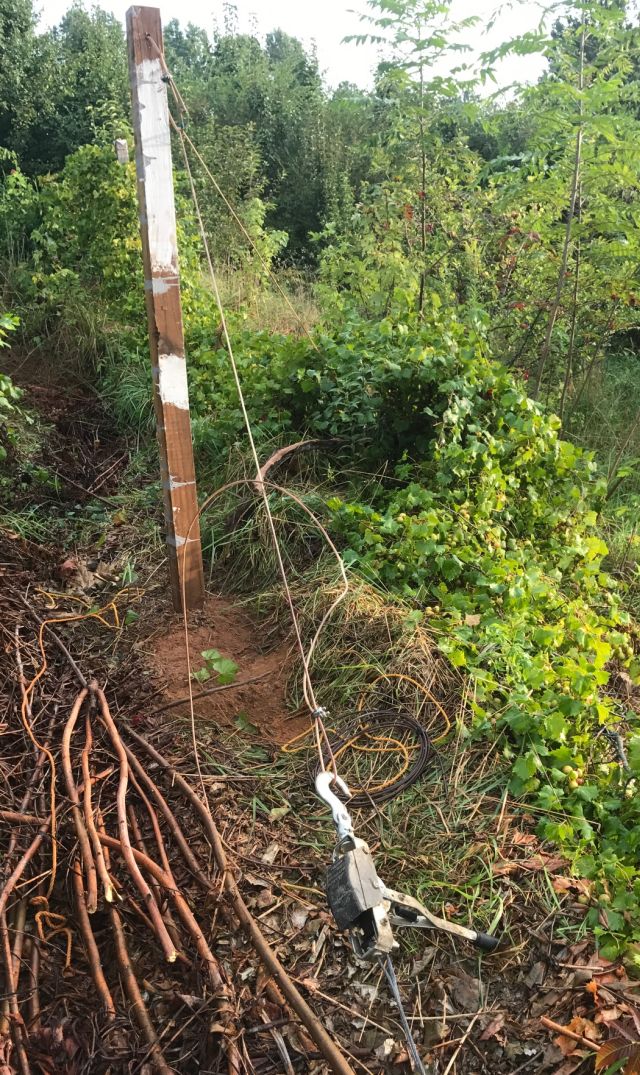
We are now in muscadine season (the southern gardeners’ grape) and I noticed that my cable trellis had broken and several muscadine trunks were on the ground.  The traditional guidance it to set the trellis posts 20 ft apart and center the trunk between the posts.   However I find the weight on the trunk from the fully laden vines is great and causes them to bend and also produces great weight on the cable.  So for my repair I decided to insert posts (4″x4″x8′) next to the two prostrated trunks and winch them up and secure the trunks to the posts and then repair the trellis.

you can see the new post, the cable extending from the come along winch to the top of the post and down to the trunk of the muscadine

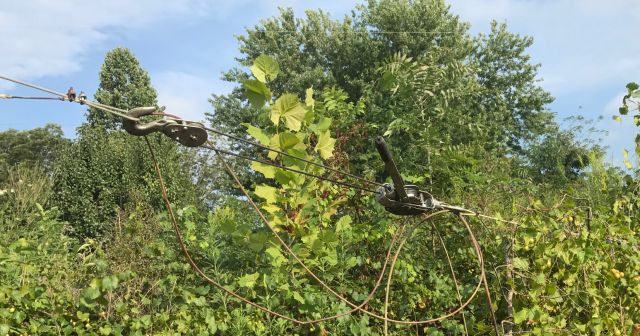
I winched up the fallen muscadine trunks and secured them with cable to the top of the posts.  Then with the trunks vertical and secured, I winched the severed ends of the trellis cable together and secured them with a new cable.

it’s so easy to do this when you have a winch, but make sure the cable is adequate to the task and well clamped to avoid injury from  sudden separation

I have held off turning my compost heap because, again, a large butternut squash plant has taken up residence.

the picture does not show the full extent of the plant. bottom right is a small butternut.  the bee watering station and a 35 gal compost tea maker are top right

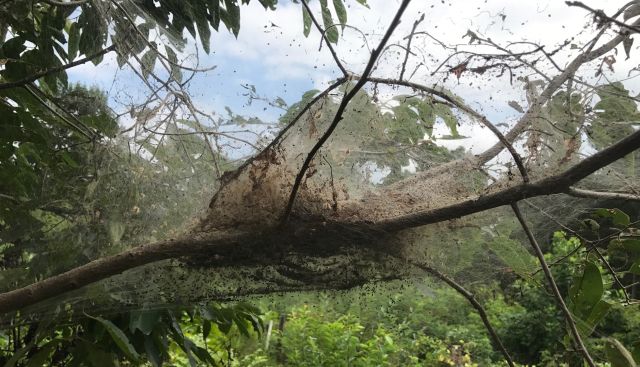
Two seasonal occurrences are the fall webworm which has taken niches in many trees.

a suggestion I read was to poke holes in the web with a stick to allow yellow jackets and other wasps access to the larvae

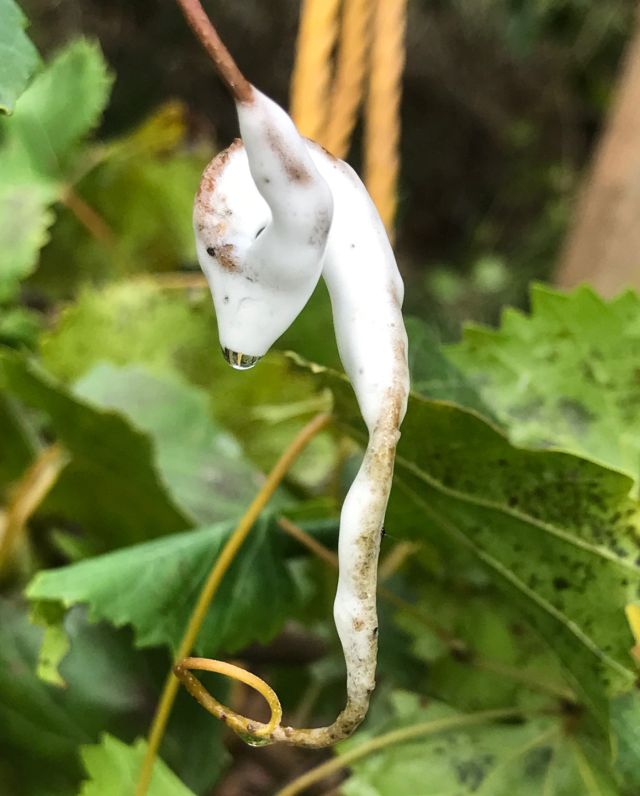
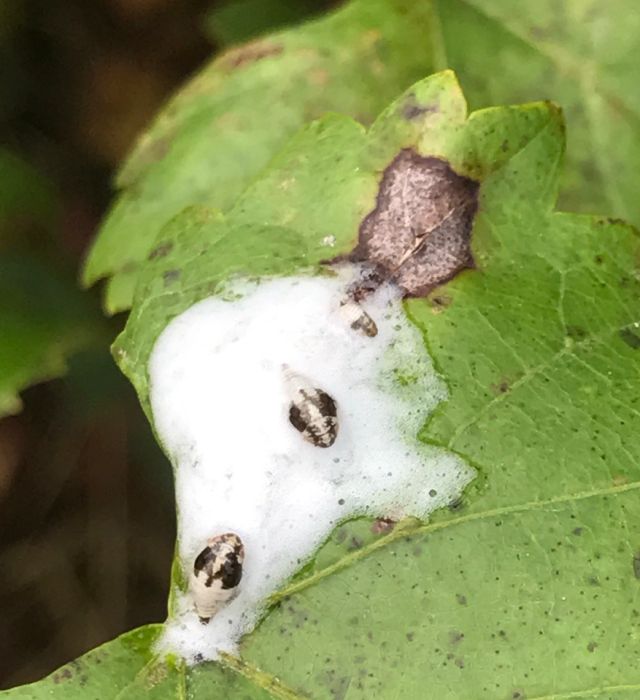
And the spittle bugs.

if you probe with a twig you will find the inhabitant
the 2 surface insects may have come from within

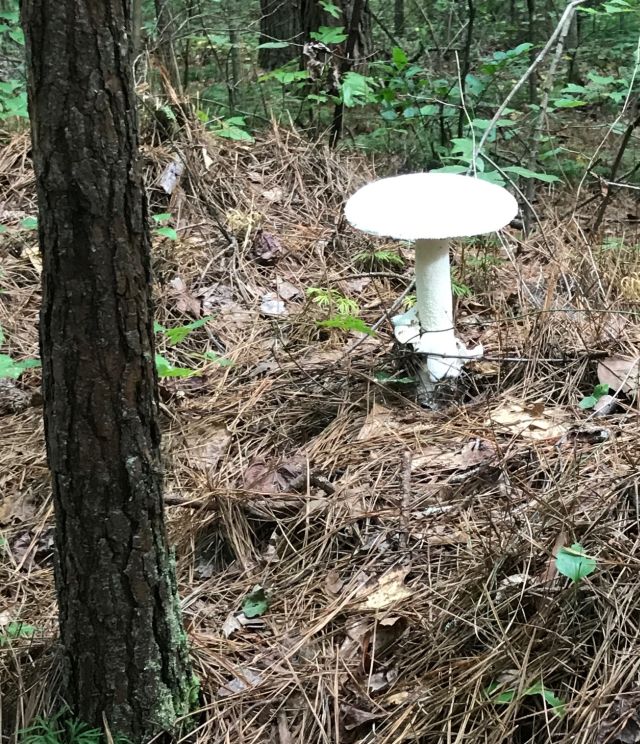
And in the woods, recent rains produced mushrooms.

this mushroom is large and for comparison I show a nearby pine tree

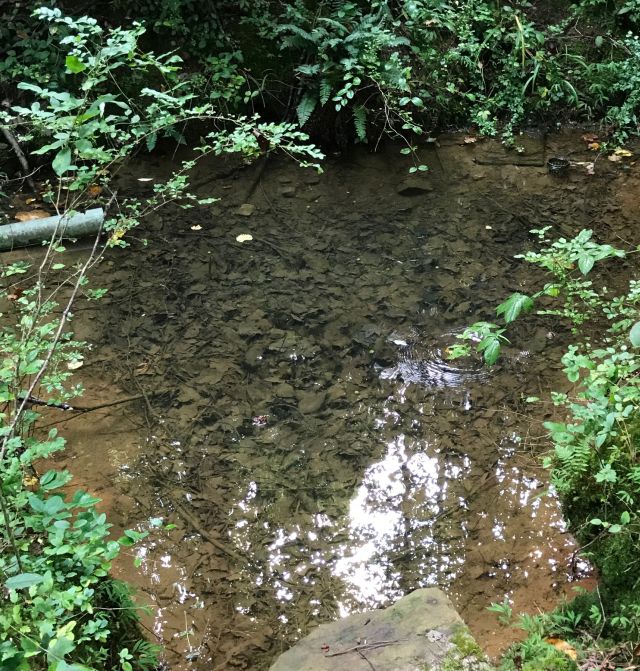
Finally, our walk in the woods includes a visit to a small pond I dug a few years ago.  I heard a sudden rustle at the water edge and saw a slender at least 4ft long snake slide into the water, and weave gracefully into a concealed hole at about water level.  At first I thought Moccasin but I think it may be a non venomous water snake.  I saw it again in the water yesterday and again it bee-lined to its hole.  I will try more circumspect approach and try take a pic next time (it’s active in the afternoon but not the mornings when the water is colder).


can’t get no satisfaction

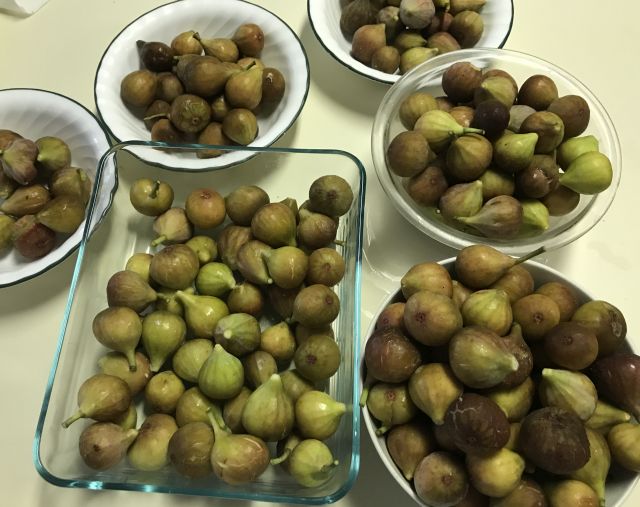
(Pic above – the Atlanta house has a big fig tree and recent rains produced a good crop.  The pic shows 2 days harvesting, net of consumption.)

The Rolling Stones lyric (1965) – “can’t get no satisfaction” played in my mind during my run through the woods.  Probably because I just watched “Norman: The Moderate Rise and Tragic Fall of a New York Fixer” and in one scene the fixer offers his help to a woman and she says “I need the satisfaction of knowing that I am doing good in the world” (48:27) and the fixer is stumped and says “That’s a big one”.  Finding pleasure and enjoyment are easy, finding satisfaction is a “big one”.

A hospital physician told me yesterday that today (Sunday) he will be trained in the new electronic medical records system his facility is rolling out.  A few thoughts – digitization should improve customer care with immediate access to records and reduction of mistakes. 

Two BUT’s:

1)  with more data on medical practitioners’ work output more efficiency can be encouraged/demanded and this will reduce practitioner satisfaction and customer satisfaction.  Reminds me of the time and motion studies during the early 1900’s – then factory workers were corralled now service providers are also snared, and the maxim – “what goes around comes around” comes to roost 100 years later.

2) the electronic brain in the background is probably doing more than just recording and regurgitating the data.  It is probably tracking inputs (patient vital signs and issues) and health outcomes and should be able soon, based on relevant data, to diagnose and recommend treatments  which in most cases will rival or outstrip the experience and judgement of the practitioner.  So not only less job satisfaction but probably fewer jobs.

As mentioned couple posts back, the 1’s and 0’s give with one hand and take with the other.


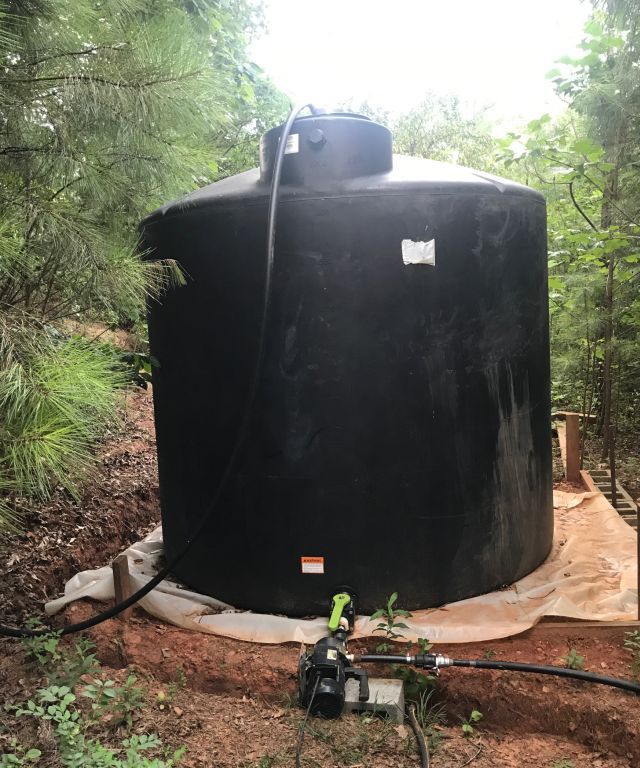
rainwater harvesting – connecting new storage tank

Last year there was a drought, I was short of water and had to transport 35 gals a day from Atlanta to Pickens to maintain key plants.  I then resolved to increase my 6,000 gal storage capacity and in May I installed a 2,100 gal tank in a separate location and filled it from my other tanks.  More rain quickly refilled the depleted tanks.

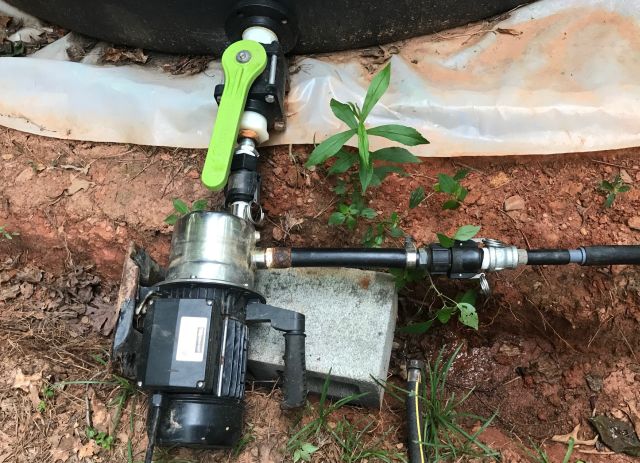
I irrigate my vegetables and fruit trees plentifully and they are producing a bumper crop of squash, cucumbers, apples, pears and also tomatoes, okra etc.   However with minimal rain past 3/4 weeks my big tanks are almost dry so I must tap into the new storage tank, which is separate from the other tanks.  I could pump directly to the crops or refill the main storage tanks.  To refill I could run a line directly to the tanks or tap into an existing feeder line.  I decided to tap into a nearby 4″ line which runs from the house gutters to two two 1,400 gal tanks.  I scrounged around and found enough fittings and surplus 1″ pipe to do the job.

here is the portable pump (on its side) pumping from the new storage tank to a 1″ line which taps into the 4″ line.  I had to cobble several fittings to go from 1″  female to the 1″ pipe and I will replace these with a single plastic fitting next visit to store
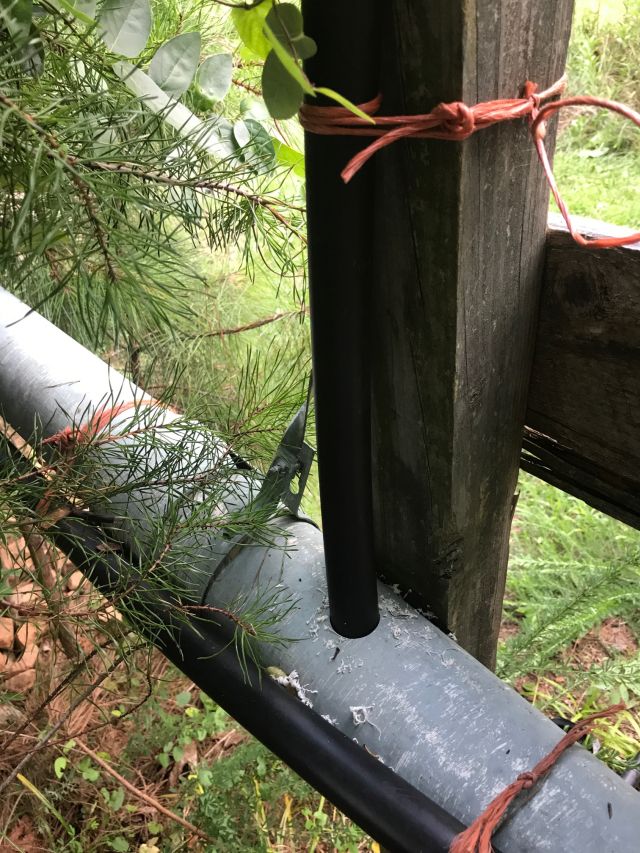
here is the 1″ pipe from the tank (shown vertically) connecting to the 4″ feeder pipe. I was lucky to find my hole saw of correct size to bore the hole into the 4″ pipe

I uneventfully pumped 1,000 gals.  The rain forecast for today and tomorrow is no longer forecast, so time to irrigate.

Btw – our Giant Korean pear tree is now producing and its pears are pest free and large and juicy.  They could be sweeter but this is the beginning of the season and our early picks have not fully matured. 

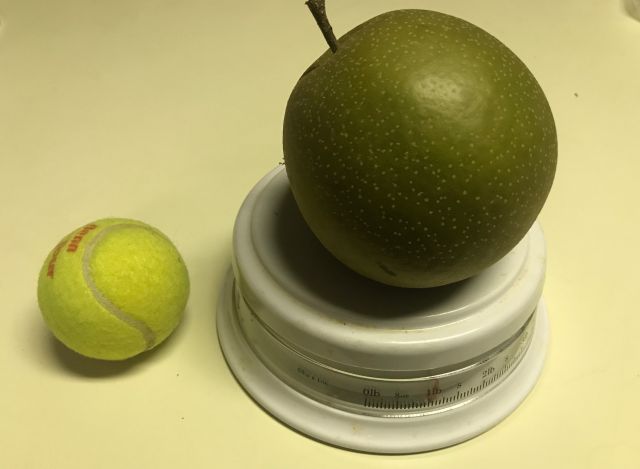
here is a large pear. it weight 1.125 lbs and you can judge its size relative to the tennis ball


Space Invaders and the world of 1’s and 0’s

After leaving South Africa in the late 70’s I worked in London for one of the “big 8” accounting firms, now called the “big 4”.  I remember a multi-day training event where in the evenings we drank a lot of beer, socialized and I discovered the addictive Space Invaders arcade video game which was housed in a large console.  As the commander of the only remaining space ship I had to dodge from side to side to evade incoming missiles and simultaneously destroy the horde of menacing invaders which moved across the screen left to right and lower and lower, and faster and faster all the while to a heart thumping hypnotizing background sound.

I have now completed a 16 week embedded systems IoT (Internet of Things) course with University of Texas, Austin, which was excellent, and one of the last projects was to write the software for Space Invaders and build the hardware. 

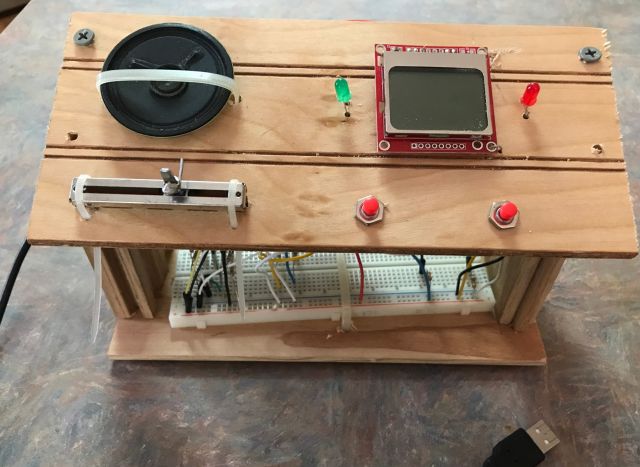
inputs and outputs

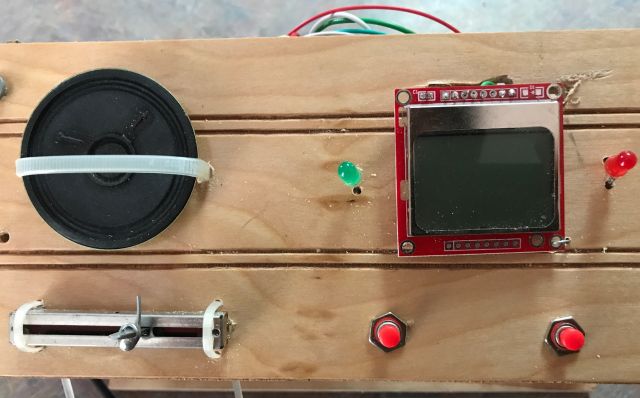
Above are the inputs and outputs.  The inputs are the slidepot (bottom left) which moves the defender ship horizontally across the screen and the 2 red buttons which are the fire buttons – one fires vertical take off missiles, the other 2 diagonally veering missiles. 

The outputs are the speaker which transmits battle sounds, the LCD screen which shows the field of combat with invaders moving across the sky lower and lower and exchange of missiles and explosions; and 2 signal lights – the green shows success, the red shows failure.

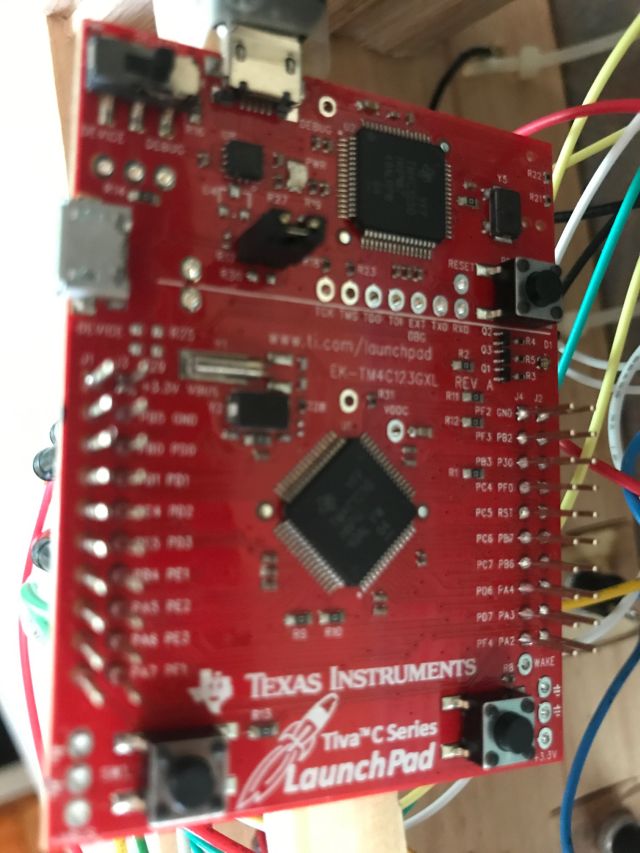
this Cortex TM4C microcontroller is the brains behind the scenes.  we used this powerful device throughout the course

My game software is relatively simple – I do not have levels to attain and the enemy does not move faster as the game progresses.  If my space ship is destroyed then I lose, if the enemy invaders or “sprites” are destroyed first, then I win.  Here is a YouTube video of my software in action – https://www.youtube.com/watch?v=Zok8T3PWSEE

We used to inhabit an analog world where even our record players and film cameras were analog with the film directly capturing the nuances of the image, and the groove in the record directly transmitting to the pickup stylus the recorded sounds of voice and music.  Now the digital world of 1’s and 0’s intermediates – sound is converted to binary digital sound and images to digital images.  And when we hear the sound through a speaker or headphone it has been converted back to analog sound. 

In the Space Invader game, ADC (analog to digital converter) software is used to convert the movement of the slide pot (which is analog) into a digital signal and DAC (digital to analog converter) is used to convert the sounds of the invaders, the missiles and explosions from digital code to analog output for the speaker.  (It is clever how the invaders are coded to advance digitally across the screen and I would explain the principles except that I will lose most all the readers who have persevered to this point.)

We immerse ourselves increasingly in the digital world for information, socializing, entertainment and transactions.  First the CD players, then the internet, now smart phones and soon more of us will fall under the spell of AR (augmented reality) and VR (virtual reality).

Through VR we will be able to visit world heritage sites and see animals and birds and fish more vividly than we could possibly do in the wild.  But will it be a satisfying experience?  Can there be satisfaction when instead of a strenuous hike, pestered by mosquitoes, to see an isolated waterfall, we ask our digital assistant for the Victoria Falls (the Smoke that Thunders) or the Niagara Falls and we zoom in to all their splendor. 

The world of 1’s and 0’s will enhance our safety (house security & car sensors) and health (personal monitoring sensors, data compilation & analysis) and efficiency.  But for me it has limits and working in the field and growing food is far more satisfying than working out in a gym accompanied by sound and video generated from 1’s and 0’s.  For me live guitar music or theater or a local sport event is more satisfying (most of the time) than the best guitarist, actors or sports heroes, recorded in video? 

Ps1 – the edX Austin MOOC uses the ARM Cortex processor and is challenging unless you are a competent programmer.  There are easier courses and I just started a Coursera course on Arduino hosted by MIPT (Moscow Institute of Physics and Technology) which is for beginners and is fun.

Ps2 – the ADC (analog digital converter) uses successive approximation to discover the unknown analog input and convert it to binary number.  The technique is similar to the process used in a game where a friend imagines a number between (say) 0 and 255 and you have to determine the number and your friend will only tell you if the answer is higher or lower than your guessed number.  So You guess 128 (half of 256); Friend says lower. You guess 64 (half of 128); Friend says lower.  You guess 32; Friend says lower.  You guess 16, Friend says higher.  You guess 24; Friend says higher. You guess 28; Friend says higher. You guess 30; Friend says lower.  You say 29 and friend says that is the answer.  The software follows a similar technique and codes “higher” with a 1 and “lower” with a 0, and at the end of it all has determined the analog number and translated it into 1’s and 0’s. 

what’s growing

After several days in the 90’s this morning was overcast and I began working at 6.30am, so it was pleasant.  With all the recent rains I have 8,000 gallons stored rainwater and can be liberal with its use.

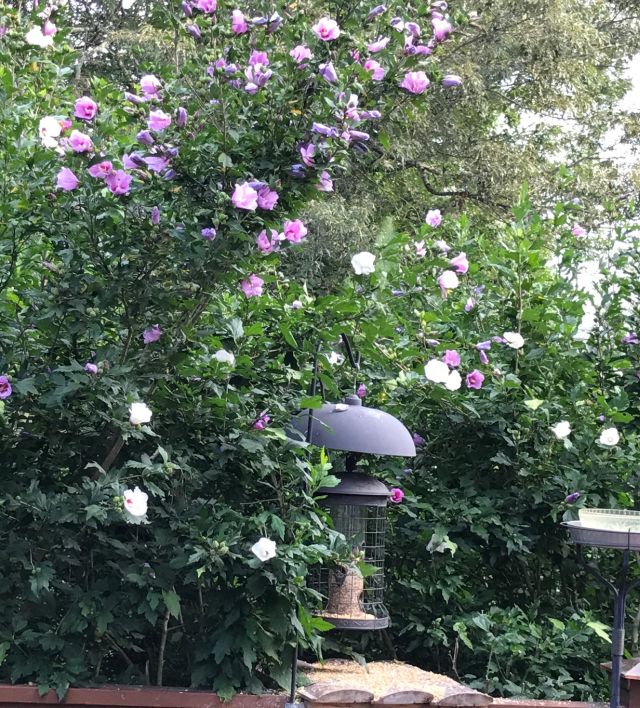
As I stepped outside I heard loud buzzing.  M. had lamented we had not trimmed the Rose of Sharon hibiscus, which overtowers our deck, and it would have fewer flowers this year.  But not this morning – there were flowers enough and many pollinators.

the bird feeder has many visitors but the flowers were the center of attraction this morning

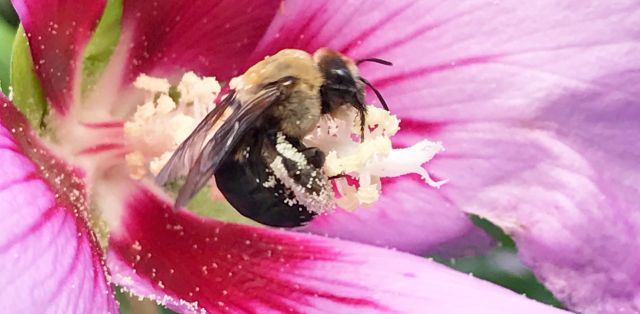
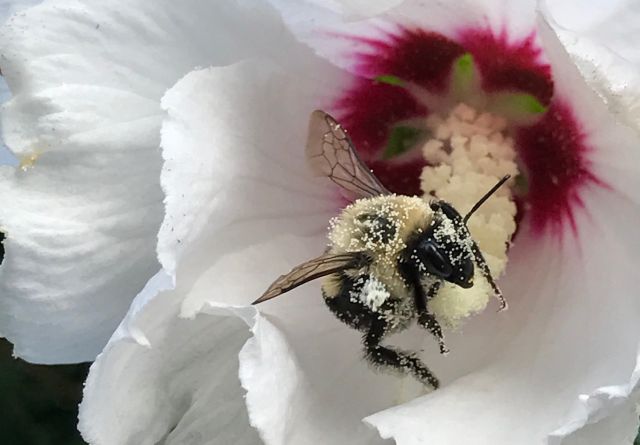
The bumblebee and also the carpenter bee are so industrious and look so cuddly.

this one had gorged and gorged and was covered in pollen when it eventually emerged

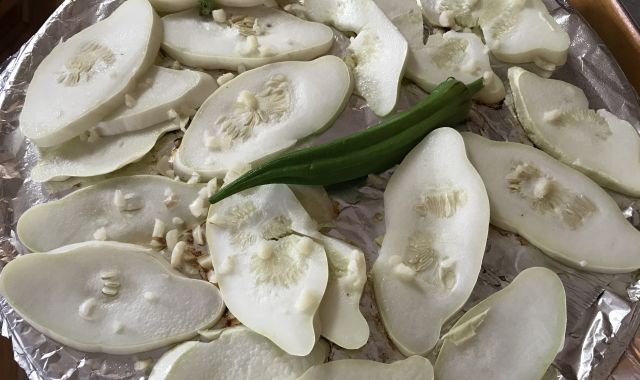
This year I have been lucky with pattypan squash.  The vine borer which usually fells the plant before the first squash has emerged is absent, so far.  Who should I thank – our multivoiced Georgia thrasher which I see so often among the plantings?  So I have lots of squash and it tastes delicious when slow grilled, with a sprinkling of olive oil, until it is tender.

pattypan squash and okra

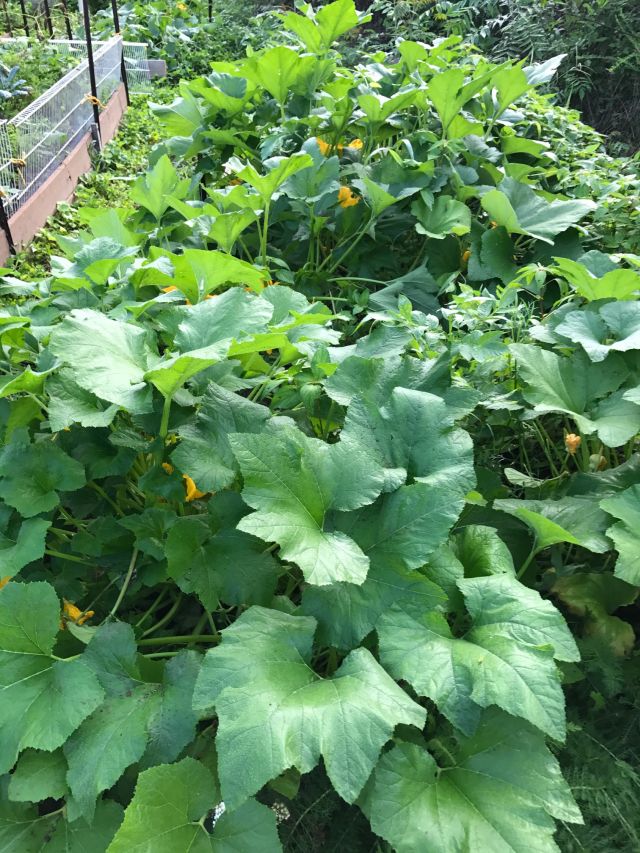
The nice thing about the squash and other large plants is they completely take over the bed and block weeds and retain soil moisture. 

one of several beds inhabited with squash, cucumber and melon plants

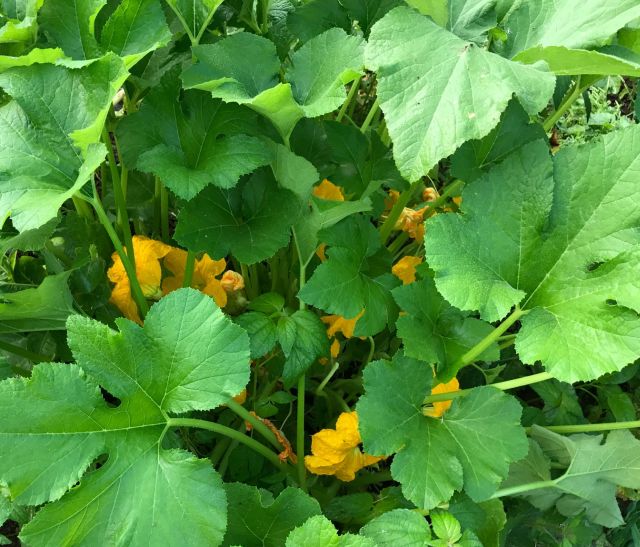
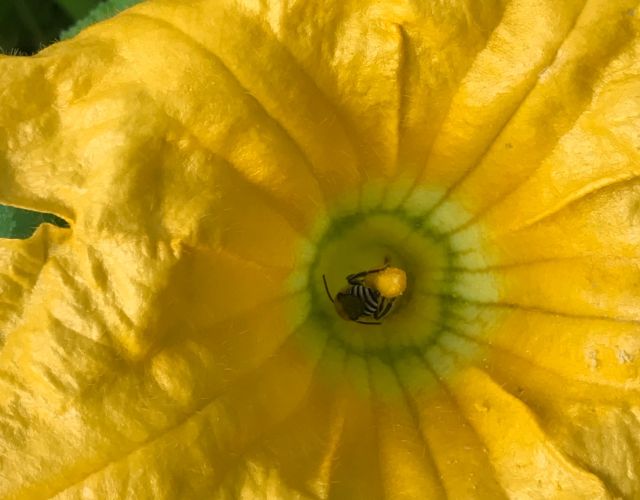
 A natural solution for the hot summer months in the south.  First you notice the yellow flowers and this morning they are filled with yellow jackets, bumble bees and honey bees.
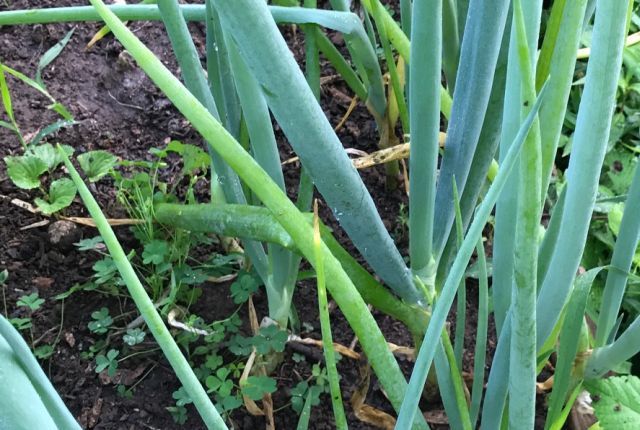
when I water the squash the pollinators pour out of the flowers and cannot wait to get back to work

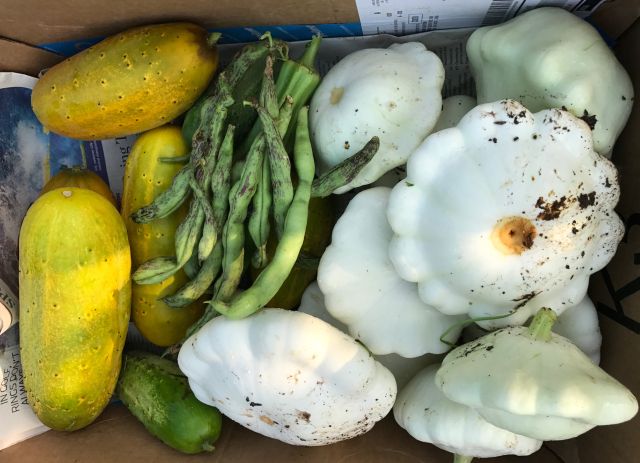
And then, a few days later the white saucers appear and expand.

the pattypan squash hides at the base of the plant -moonlike orbs

Often when vegetables get large they become vibrous but our experience is this squash, even large, retains its tenderness.  So we allow them to grow a bit.

beans are still coming in. cucumbers can be secretive so we sometimes only find them when they are a bit oversized, but still taste good.
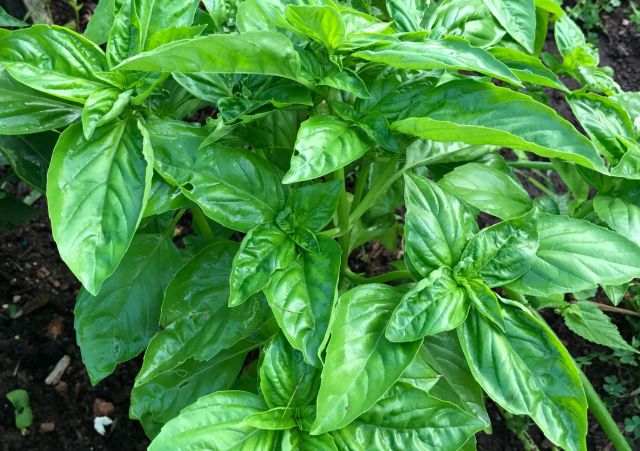
basil is doing well
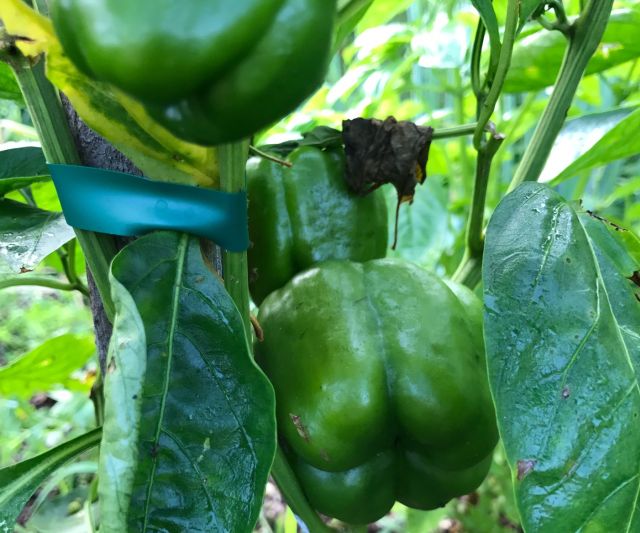
this year several pepper plants were toppled so I staked them to bamboo poles from my bamboo growing area
and my self seeded onions are ok but not large

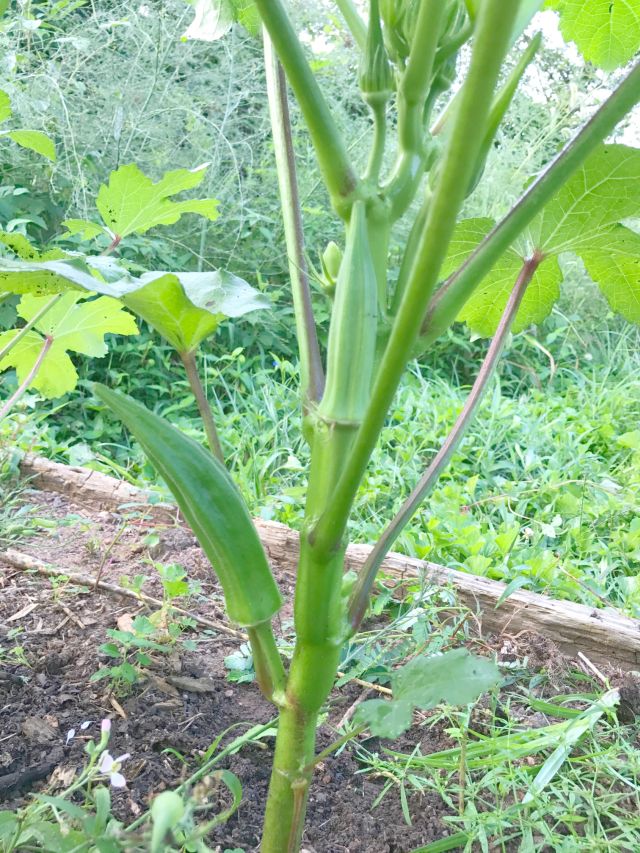
And now, at last, okra is stepping out and we shall grill today our first okra of the season.

okra plant grows easily and well in our area and we can eat the okra raw or grilled, but once it is too large it is fibrous and inedible

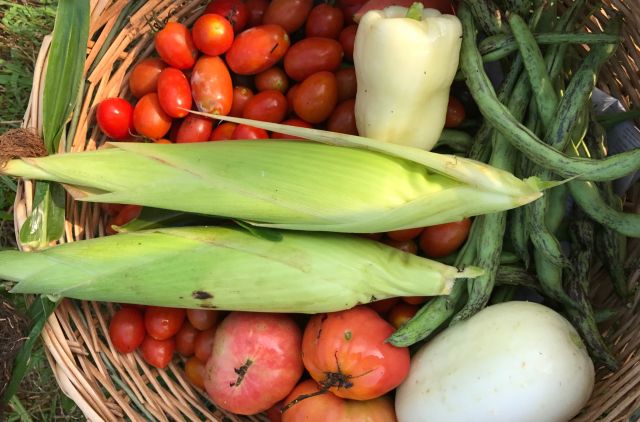
We filled the basket with some corn (very sweet), white cucumbers and the ongoing supply of tomatoes.

in my previous post on what’s growing, I described my diatomaceous earth treatment for insects on my tomatoes. none of those insects have reappeared so the treatment works

And we selected apples from several different trees all with distinct different tastes to be sliced and added to our breakfast of old fashioned 100% whole raw oats, mixed with sunflower seed, brown flax seed, yogurt and sweetened with our honey.

Finally we lathered our 14 year old Trudy with medicated shampoo for her mild  skin infection and walked in the woods and, as we approached the water hole which is fed by a natural intermittent spring ….

the digging of this pond was a saga which I have narrated elsewhere

We noticed a turtle heading up from the pond

this one withdrew into its shelter

and then another more inquisitive turtle

bolder and inquisitive

And on our return we hosed Trudy thoroughly.

what’s growing

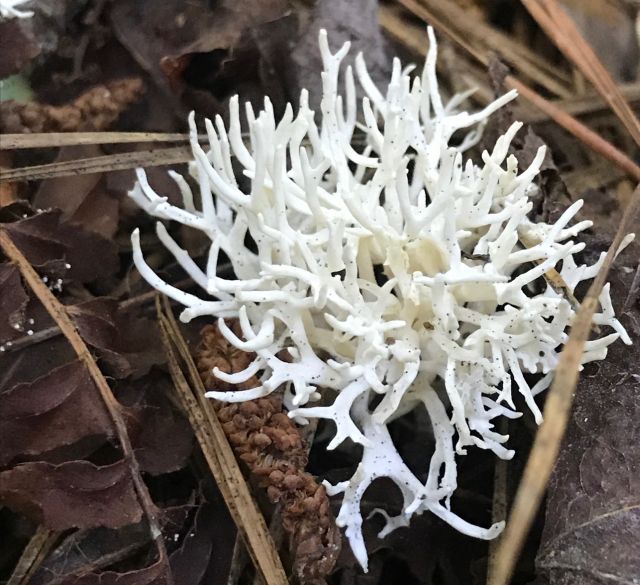
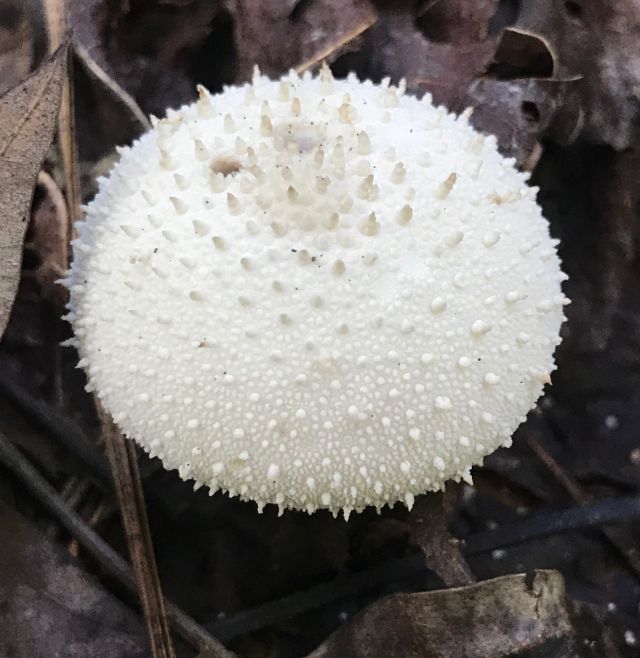
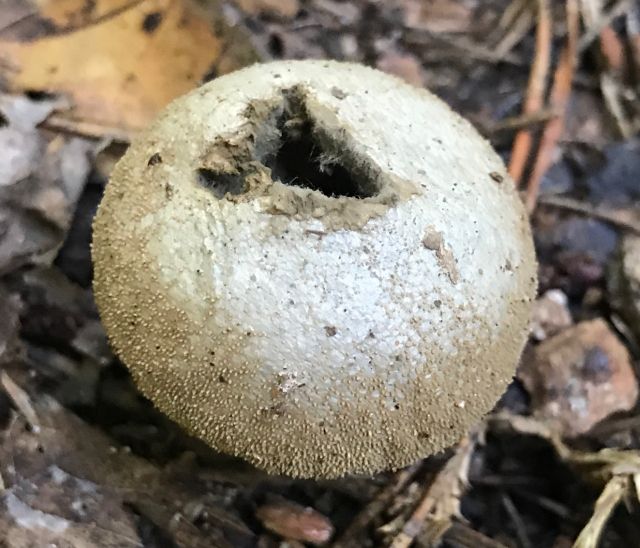
We have had lots of rain and in the woods interesting fungi appear such as above or this unusual specimen below.

The puffballs attract little attention while growing.

But when it matures a hole appears at the top.

touch the puffball gently and powder puffs out the aperture at the top

In addition to the regular looking fungi there are other varieties, here is another one.

But enough with the fungi, what’s edible that’s growing?  The blueberries and blackberries are done for the season.  And the jujube, such a stellar producer in previous years, has no fruit at all – probably the late freeze.  Although the fig trees were also tripped by the late freeze, there are small figs on a couple of trees which grew back strongly, so figs for the plate later.   The apple trees are producing steadily – the early season is in full production and mid- and late-season species look good.  The one peach tree as always is afflicted by pests and disease, but the little snippet we had was delightful.  Can peach trees be grown organically?  My pears should soon be ready apart from one tree that lost all its blossoms in the late freeze.

The vegetable area is humming with activity.  Too hot for the greens but the squash looks good.

yellow jacket in squash flower

The yellow jackets have not been a problem.  I try to walk carefully in the growth looking out for yellow jacket activity – stand on their underground hive and they will chase.  I also prod ahead with a long stick not wanting to surprise a snake.

I almost stood on this fella, not venomous but there are copperheads around as well.

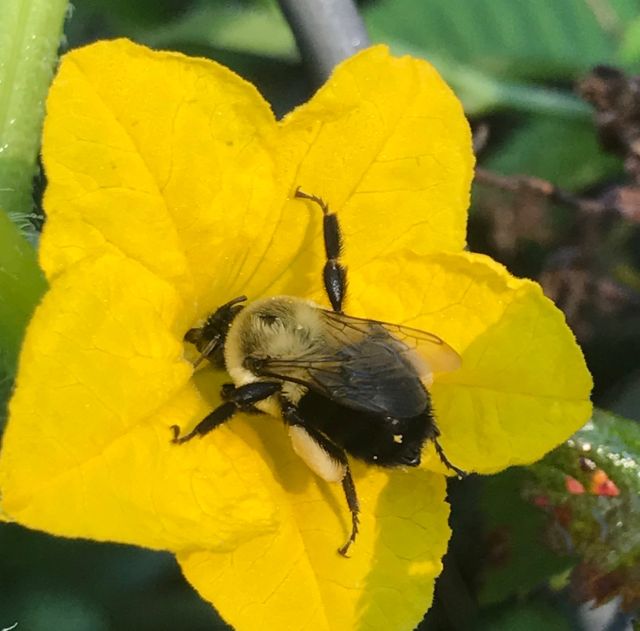
Cucumbers too are flowering and attracting bumblebees.
very engrossed, I like his right arm acting as a stabilizer as it burrows in

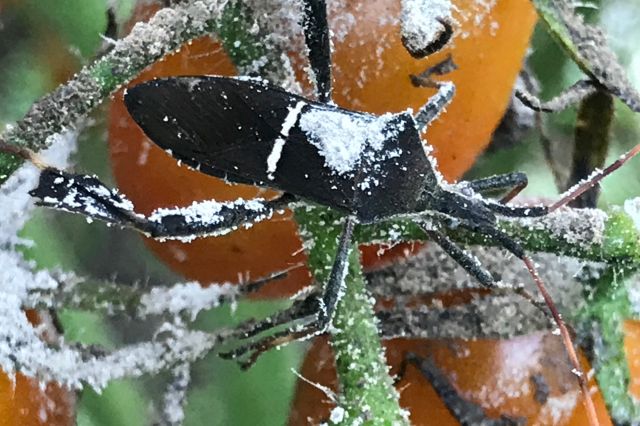
I do have a problem with this insect which started on the blueberries and then relocated down the hill to the vegetable patch and the tomatoes.  Yesterday there were parties (10-20) of them gathered on clutches of cherry tomatoes.  Instead of my regular standby neem spray, I dowsed them with diatomaceous earth powder, which they do not like.  From >100 yesterday, today there were about 20.
coated with diatomaceous earth, an organic insecticide which worked great on the mites on our chickens and is effective here as well.

I apply directly on the insects either trickle onto them from above (they seem not to notice) or with my fingers flick the dust onto them.

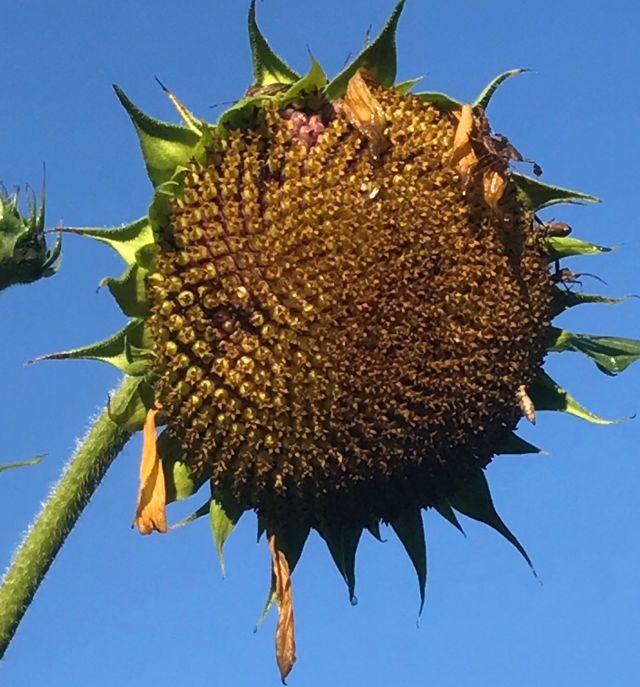
I planted giant sunflowers among my tomatoes, not a good idea, but they sure are striking.

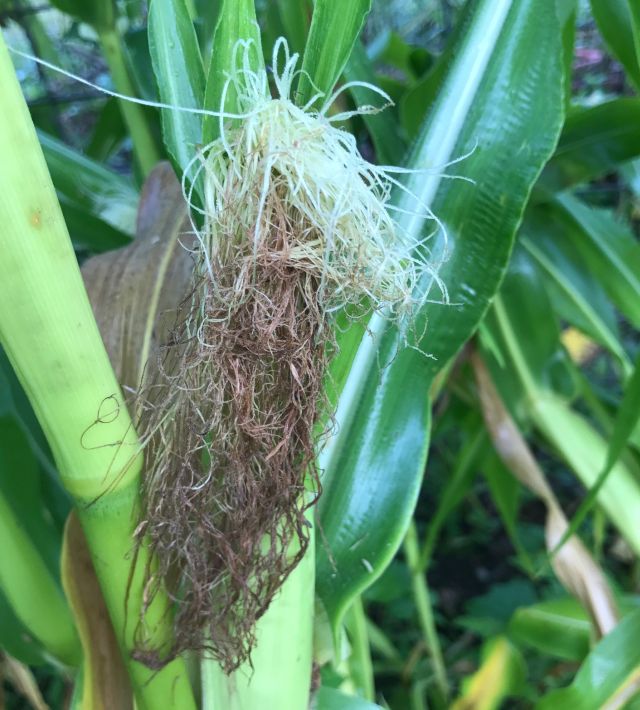
I was paging through “Botany in a Day” by TJ Elpel.  I knew that the tassel of corn contains pollen powder.

tassel of the corn

But I was fascinated to learn that corn silk conveys the pollen sperm along its length to impregnate each kernel of corn – therefore every single seed/kernel produced on the cob results from separate impregnation.

I assume the brown silk strands have already fulfilled their function, and work still awaits the white silk strands

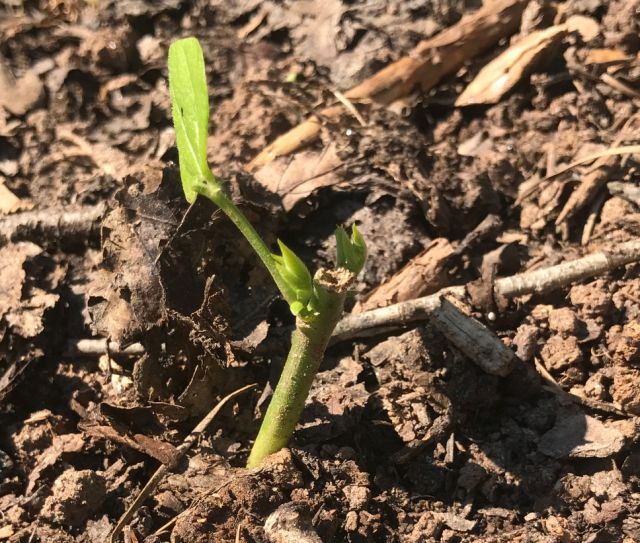
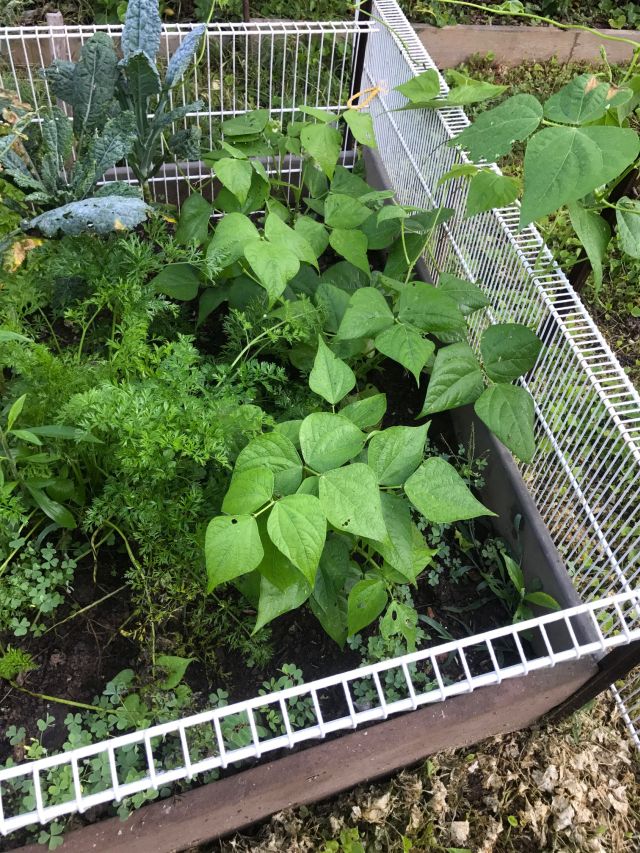
It’s difficult to keep rabbits out and they love young bean plants.

bean plants regularly truncated by rabbits

I surrounded a raised bed with surplus shelving and it denies access to rabbits, so far.

soon these transplanted, formerly decapitated bean plants, will be producing

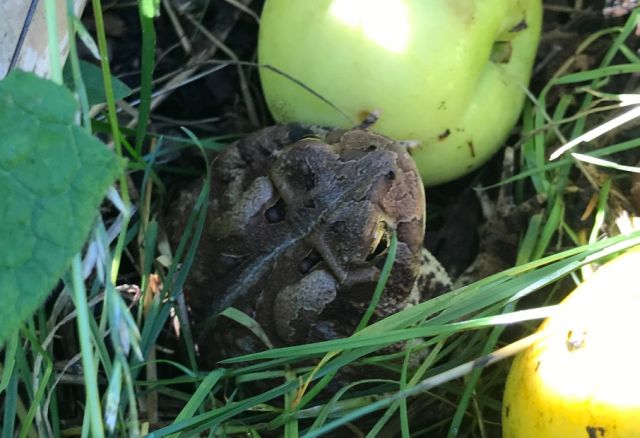
And finally a smaller visitor among fallen apples.


cracked iPhone 4 screen replacement

This morning’s wsj 6/21/17 first page article says “Bust Your Phone Again?  These Teens Are Here To Help”.  A 16 year old Nantucket resident instead of surfing, made close to $24k last summer repairing smart phones and is busy again this summer.  His charge to repair a cracked iPhone 7 Plus is $189.99.  

M. dropped her iPhone 4 last week and the screen is hard to read – see pic above.  She wants to wait for the new iPhone due later this year.  So I suggested I would try repair it.  On the internet retail giant’s website we ordered a kit comprising new screen and repair tool kit for approximately $17 plus tax.  The iPhone 4 is an old phone so replacement parts are reasonably priced.  Our phone is a Verizon phone which is different from AT&T, so it was important to order the right screen and also to follow YouTube instructions for the Verizon/Sprint phone not the AT&T. 

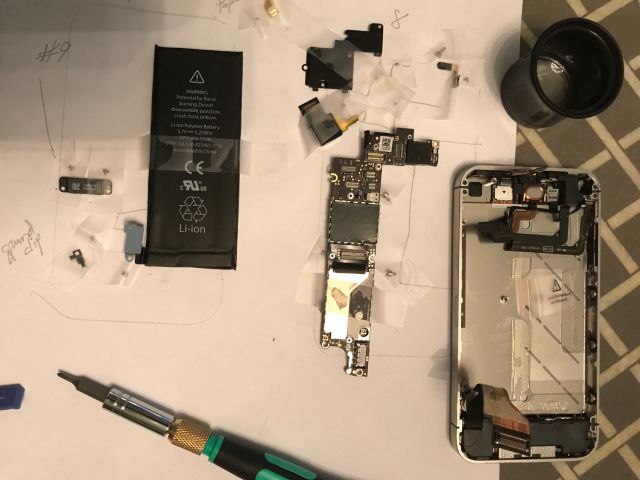
The kit arrived and following the excellent tutorial I began dismantling the phone.  There are lots of tiny screws and to keep track I followed a suggestion to sketch an outline of the phone and tape the screws and parts to the location where they belonged.

the easy part – removing the back cover. you can see the 2 torx screws taped below the back cover

I quickly encountered a problem – the Phillips screwdriver provided with the kit was not up to the task.  So I stalled for a day and visited a computer store to inspect their screwdrivers.  The size I needed was a Phillips PH000 and there were lots to choose from.  I settled for a kit made in Taiwan made of chrome-molybdenum, described as professional, with an ISO certification.  Perhaps all these plugs would help.  And they did – no more problems with screws.  And then I stalled again until I read this morning’s wsj article and, fired up, I resumed.

To get to the screen a whole lot of parts have to be disassembled.  Not for those faint of heart, or with unsteady hands or blurring close up vision or impatient to get the job done.  I could tick some of these boxes.

the guts have been removed and down to releasing the screen from the frame

A hair dryer was conscripted to soften adhesive and then the old cracked screen was off and the new screen installed.  On the re-assembly road back I was too confident and went too quickly and missed a few steps and had to backtrack, which was frustrating.  But eventually all the components were in place and the critical moment arrived – would it power on and make and receive a call, and it did.

the new screen has a white border, the old a black. but M. is not complaining and is almost adulatory

water heater expansion tank

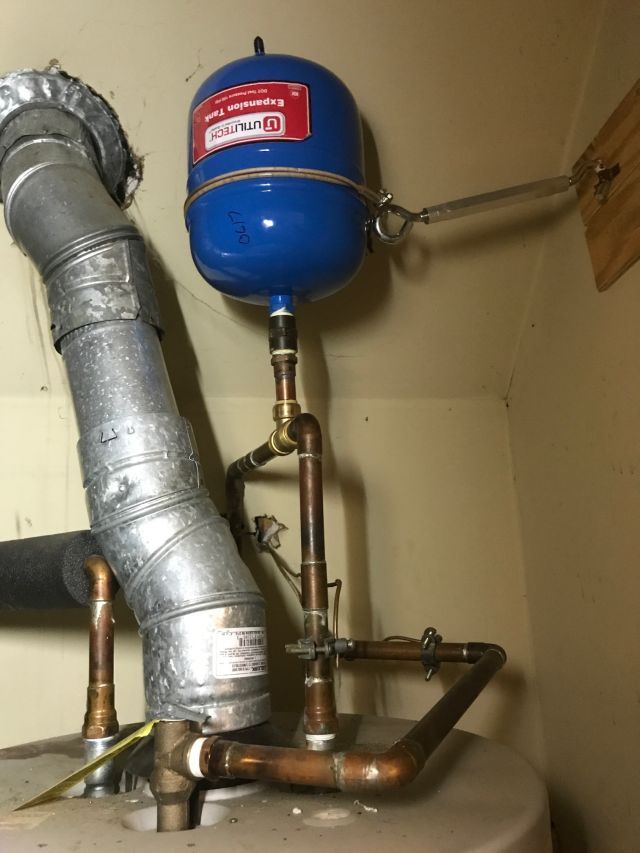
In addition to my place north of Atlanta where I spend most of my time, we have a large house in Atlanta which we will sell when M. stops working.  I have begun readying the Atlanta house for sale.  It has two water heaters and neither has an expansion tank.  The code requires an expansion tank be installed if a new heater is installed or if a backflow preventer (check or one way valve) is installed.  

A backflow preventer prevents water on the house side of the device from flowing back into the main supply.  Since the house side is sealed (until you open a faucet) when water expands (from being heated by the water heater) it has nowhere to go and the pressure build up could damage appliances such as the water heater.  Therefore the need for a device which can accommodate the expansion of the water.  An expansion tank should not be confused with a T&P (temperature and pressure valve) which is attached to water heaters and releases water when the pressure is unusually high.

Expansion tanks are usually connected to the cold water inlet to the water heater.  The tank has an air bladder/diaphragm  and air valve which looks like the valve on car tires.  Instructions suggest inflating the bladder to the pressure of the water in the house.  The size of the expansion tank depends on the size of the water heater.  Our water heater is 50 gallons and a 2 gallon expansion tank cost $40 is adequate.

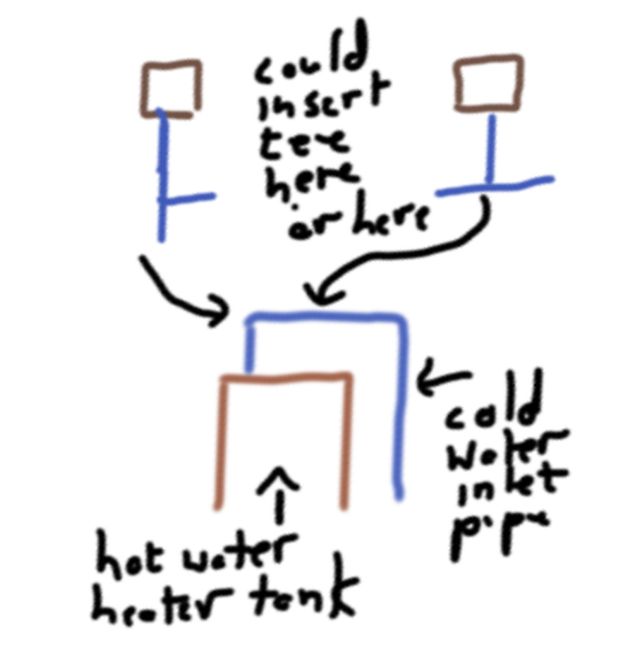
The question is where to add the tee for the tank. 

One suggestion was on the 90 degree bend where the tank would have the most support, but this requires unsoldering the elbow and then either re-soldering or scrupulously cleaning the existing  pipes to accommodate a SharkBite or GatorBite fitting  (“shark fitting”).  The easiest was between the 2 elbows and I ascertained there was sufficient room to pull the pipes apart to accept a new tee fitting.  Next question was to solder or use a gator fitting?  A soldered joint is rigid and regarded as permanent and once soldered can hold the tank in a vertical position.  A shark fitting can be swiveled which is convenient at times but cannot hold a tank vertical since the slightest nudge will cause it to swivel down.

I have done lots of soldering in the past.  Solder fittings are much cheaper than shark fittings and are permanent.  However, shark fittings are very easy to use and easy to undo such as when you have to replace the water heater.  There is a nagging concern that a shark fitting can come undone when I am away from the house, but the literature and others assure me this will not happen.  So I bit the bullet and used a shark tee fitting and developed a method to ensure the expansion tank stayed vertical.

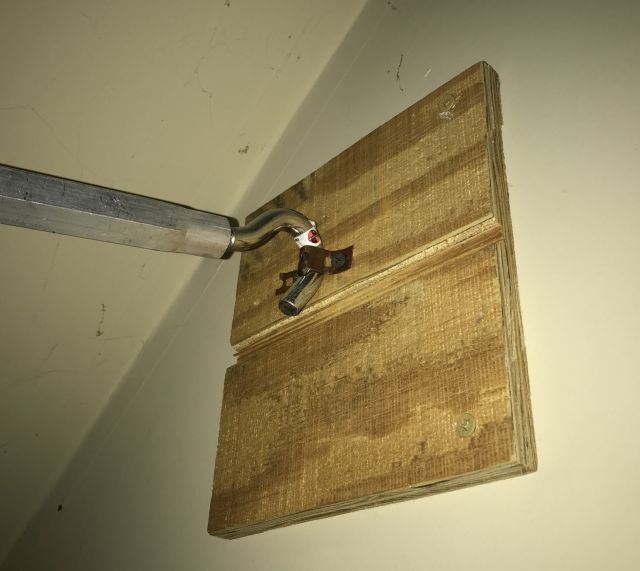
Steel cable is secured around the middle of the tank.  A turnbuckle is attached to the cable and to an anchor on a wood plate which is screwed into a stud. 

the wood board has screws on the right vertical edge going to the stud. the eye of the turnbuckle is secured by a copper strap screwed to the board

By adjusting the turnbuckle I can assure the tank is vertical. 

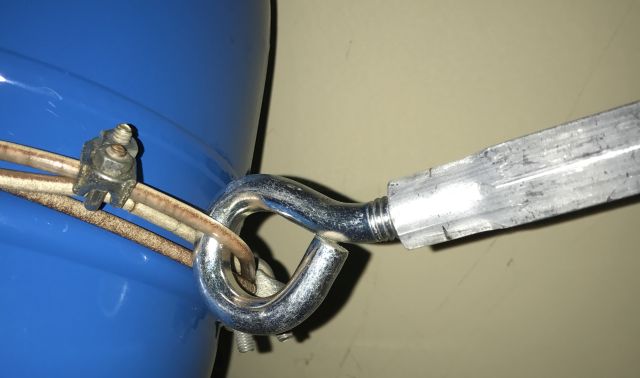
a close up of the cable securing the expansion tank. I used one clamp for a tight hold on the tank and another clamp to provide a loop to secure the eye of the turnbuckle

I did solder the 3/4″ male fitting which is coupled to the male fitting on the tank.  I happened to have a 3/4″ male and coupler available, otherwise I would have simply purchased a 3/4″ female fitting.  If I had simply soldered the tee fitting I could have dispensed with the cable, turnbuckle and other bits shown above.

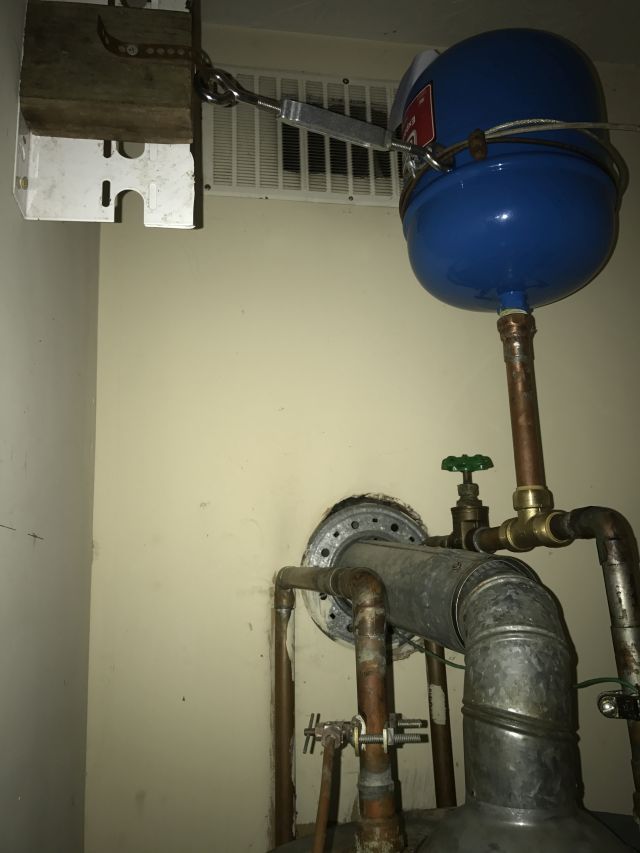
And shown below is the expansion tank on the 2nd water heater.

I reduced the space between the wall and the tank by using a right angle bracket and therefore could use a smaller and cheaper turnbuckle

what’s growing

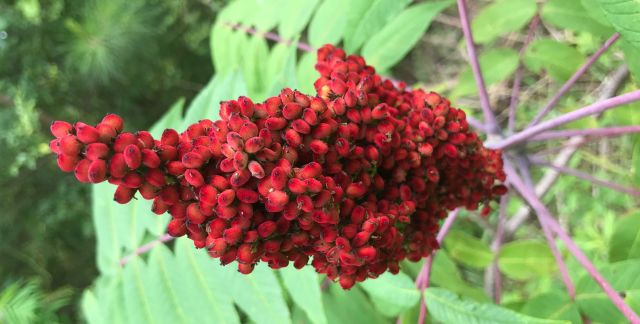
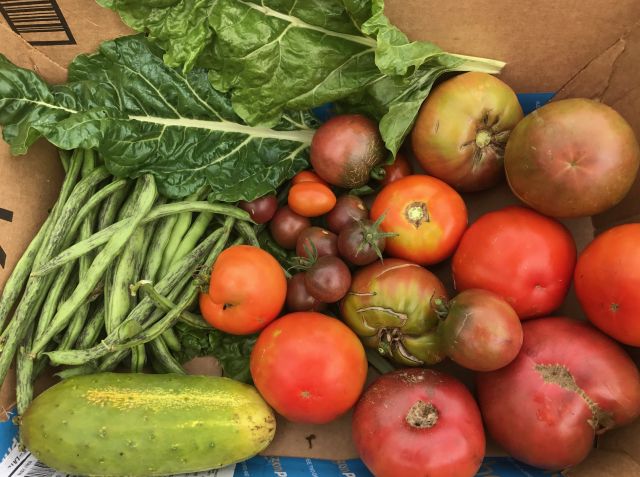
My last growing update was June 2.  Since then ripe tomatoes, blackberries and blueberries have come on stream.  And wild plants such as the pokeweed above, compete for attention.  Yesterday’s basket provided a delicious salad – tasty tomatoes, cucumber, beans plus onions and garlic (not shown).  All freshly picked.

a mix of heirloom and hybrid tomatoes. the rattlesnake beans grow very well. the 2 chard leaves show how well chard is holding up as summer matures
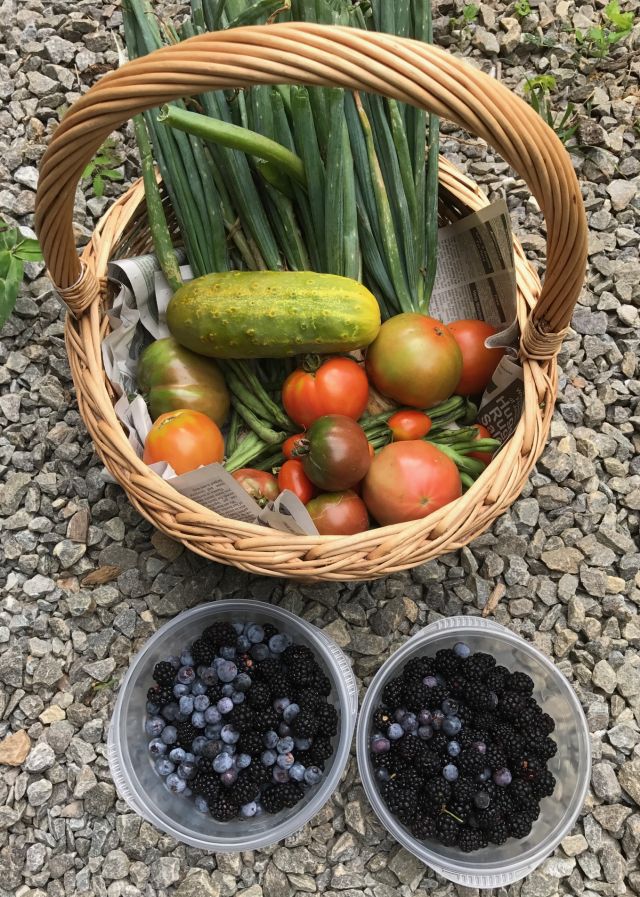
and today’s basket which includes onions and blackberries and blueberries

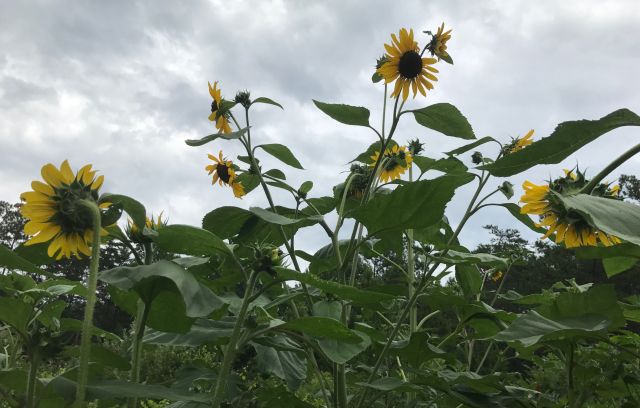
I inter-sprinkled some seeds for large sunflowers in the growing area and the sunflowers are now between 9ft and 10ft tall.

reaching for the sky

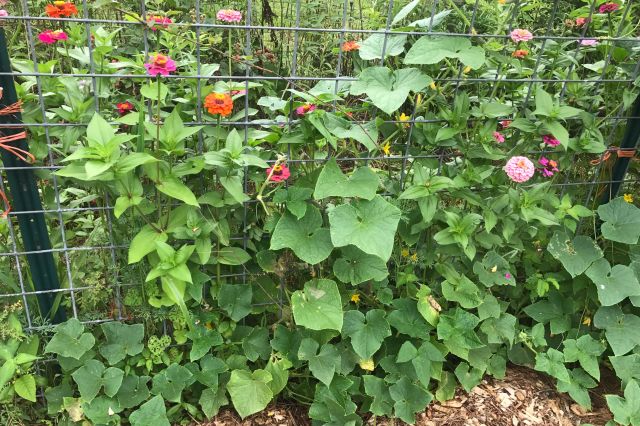
I also added color to a cucumber area by sowing wild flower seed behind the support on which the cucumbers are growing.

just for fun – flowers mixed with cucumbers

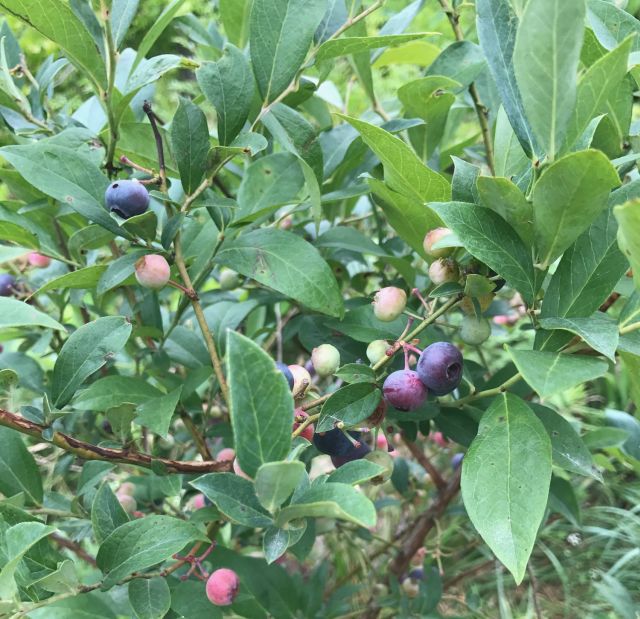
Last year my blueberry leaves were sickly yellow – chlorosis resulting from too high ph, and I added sulphur powder.  This year the leaves look much better.

leaves are better, however because of the drought and reduced watering last summer, the plants suffered and are now slowly coming back

A couple of the weaker blueberry plants had insects on some of the branches.  Initially I sprayed with neem oil but it gives the berries a distinctive smell.  Since their presence is limited, I now gently cut the stem on which they are gathered, lower it onto the ground and grind it (and them) into the soil with my boot.

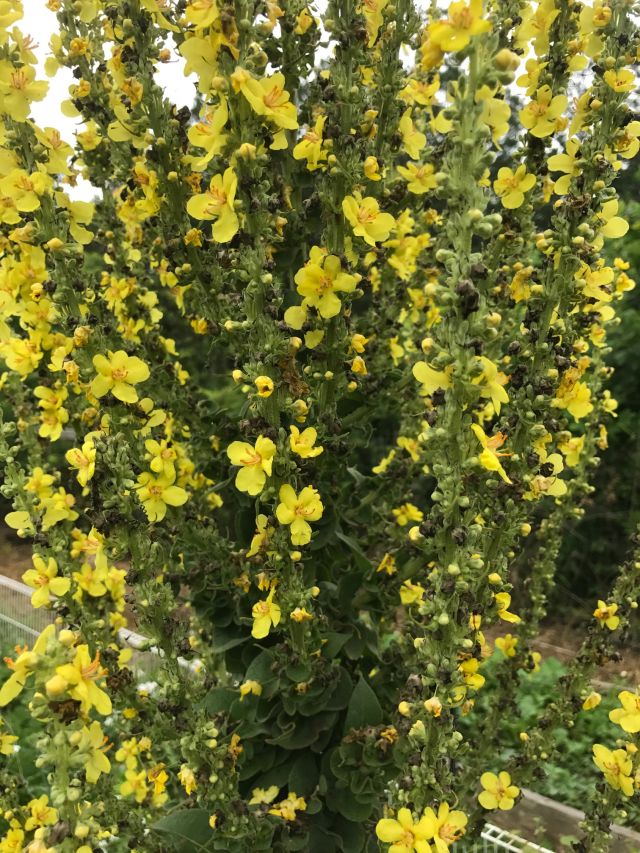
The 6ft mullein is still bearing its lovely yellow flowers and keeping bumble bees busy.

garlands of striking yellow

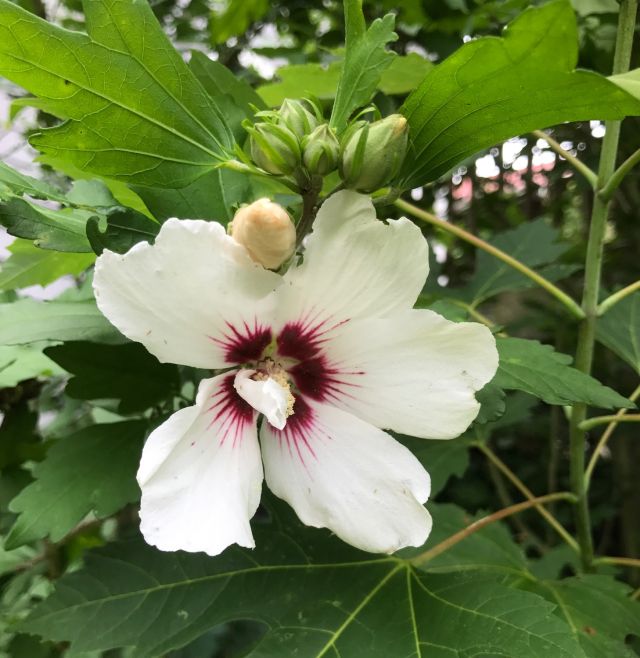
And now the Rose of Sharon which invades our deck area and provides cover for birds at the feeder, has begun producing its distinctive flower – perhaps we will again be visited by hummingbirds.

I am gathering in the garlic and onion.  Because of plentiful spring rains, garlic is larger than prior years.

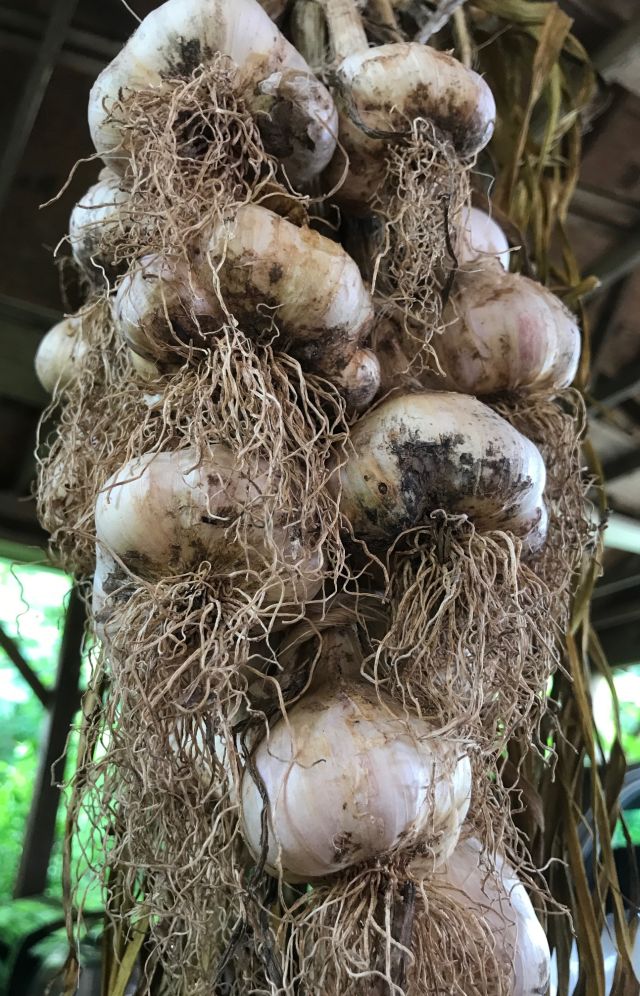
my garlic does best when suspended in the carport. very little rotting and easy to pick for the table

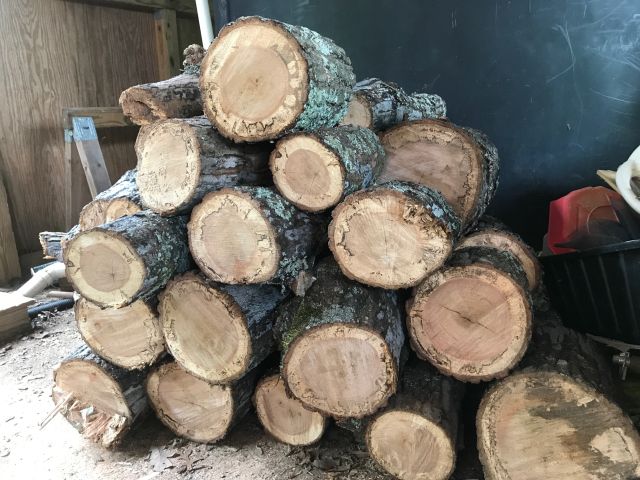
Finally, a friend had to have an oak tree brought down and I visited and collected some firewood – all from the branches.

I cut the wood to fit the length of the wood stove. I will split when needed